
Maybe you’ve sat with your journal open, pen in hand, knowing something needs to come out but finding no words that fit. Women with depression in a recent study nearly doubled their emotional expression scores—from 13.00 to 24.38—after art therapy intervention, with effects lasting five months. When words feel stuck or insufficient for complex emotions, creative expression offers pathways that bypass verbal limitations. This article explores how art therapy and visual journaling unlock emotional understanding, what the research reveals about brain-based mechanisms, and practical ways to integrate creative tools into self-reflection work.
Quick Answer: Art therapy is a therapeutic approach that uses creative expression—drawing, painting, collage, and other visual media—to access and process emotions that resist verbal articulation, activating distinct brain pathways that support emotion regulation and self-awareness development.
Definition: Art therapy is a structured practice that uses visual media to externalize and process emotions through symbolic and sensory pathways when verbal expression feels blocked or incomplete.
Key Evidence: According to research published in the NIH National Library of Medicine, 78% of hospitalized youth reported art therapy helped them understand the connection between thoughts and feelings, while 80% learned new ways to express themselves.
Context: These improvements occur because creative work engages sensory-motor and affective brain pathways distinct from language processing.
Art therapy is not decoration or distraction—it is structured observation that makes internal states visible. When you put emotions into visual form, you create something you can look at rather than something drowning you from within. Over time, patterns emerge across multiple images that reveal emotional themes invisible in any single moment. The sections that follow will walk you through exactly how this process functions, what the research demonstrates about brain-based changes, and practical ways to integrate creative expression into your existing journaling practice.
Key Takeaways
- Measurable emotional expression gains: Women with depression showed significant improvement in emotional expression scores with effects persisting months later, according to research in the Journal of Psychology of Woman
- Brain-based mechanisms: Art-making activates specific neural networks involving the medial prefrontal cortex and amygdala for adaptive emotion regulation
- Bypasses verbal resistance: Visual expression accesses emotions when traditional talk therapy feels blocked or incomplete
- No artistic skill required: Therapeutic benefits depend on authentic expression, not technical ability or aesthetic quality
- Complements journaling: Integrating visual elements with written reflection creates layered understanding unavailable through words alone
What Art Therapy Does for Emotional Processing
You might notice that certain feelings resist language, especially during overwhelm or trauma. Art therapy facilitates emotional articulation by offering pathways to express what cannot be verbalized, bridging internal states and external communication. According to researchers studying depression treatment, this bridge matters because many emotions simply don’t translate into words.
The core mechanism involves externalization. Draw anxiety as a tight spiral or paint grief as muddy grays, and you create psychological distance. What felt unbearable when trapped inside becomes workable when placed outside. This shift from immersed to observing changes how you relate to difficult emotions.
The evidence supports this process. In a seven-year study of hospitalized youth, researchers found that 80% of participants reduced self-injurious behavior, 75% experienced decreased depression, and 66% developed greater self-confidence through consistent art therapy practice. These changes suggest that creative expression interrupts destructive coping cycles by offering alternative channels for processing distress.
The goal isn’t creating “good art” but using materials as thinking tools when emotions feel too large, vague, or complex for words. A scribbled mess might externalize rage more accurately than any careful description. A collage of torn magazine images might capture fractured identity better than coherent sentences. Process matters more than product.
Research demonstrates that engaging in art-making activates sensory-motor and affective brain pathways, promoting emotional regulation and decreasing limbic hyperactivity in depressive states. This neurological shift explains why creative work feels fundamentally different from talking about emotions. You’re engaging distinct processing systems that may be more accessible during certain emotional states, particularly when verbal circuits feel jammed or exhausted.

How It Differs from Talk Therapy
Visual work engages different neural networks than verbal narrative. According to research on neural mechanisms, the arts therapy model shows creative expression helps explore emotions via pathways involving the medial prefrontal cortex and amygdala for adaptive regulation. These are not the same circuits activated during verbal processing.
The symbolic nature of visual work allows multiple meanings to coexist at once, which often feels truer to complex emotional experiences than linear verbal explanations that demand coherence and sequence. A single image can hold contradictions—grief and relief, anger and love, fear and hope—without forcing resolution.

The Research Behind Creative Expression and Mental Health
The data on art therapy’s effectiveness comes from controlled studies tracking measurable outcomes. In a randomized trial examining women with depression, researchers documented that emotional expression scores rose from baseline 13.00 to 24.38 after intervention, with statistical significance and effects maintained at five-month follow-up. This nearly doubled capacity for emotional articulation represents substantial change, not marginal improvement.
Long-term outcomes reinforce these findings. A seven-year study of hospitalized youth found that 85% experienced reduced anger through consistent creative practice. These results suggest that art therapy doesn’t just provide temporary relief but creates lasting changes in how people process and regulate emotions.
Brain imaging reveals the biological foundations of these benefits. Art-making decreases limbic hyperactivity characteristic of depressive states while activating emotion regulation networks. This neurological pattern explains why creative expression produces measurable outcomes rather than serving merely as pleasant distraction.
The research spans diverse populations. Benefits have been documented across women with depression, adolescents in psychiatric care, juvenile justice participants, and trauma survivors. This broad applicability suggests that creative expression tools can enhance self-reflection practices for anyone engaged in personal growth work, not only those in formal therapy settings.
Research teams note that creative engagement creates measurable, lasting changes in how people access and communicate emotional experiences, particularly valuable when traditional approaches feel blocked. For those who’ve felt frustrated by repeatedly circling the same narratives in journals or hitting walls in talk therapy, this finding offers practical hope. The limitation isn’t you—the limitation is relying on a single processing channel when multiple pathways exist.
Why Visual Expression Reaches Different Emotions
The hands can respond before the verbal mind takes over, allowing access to pre-verbal or non-verbal emotional content. This timing matters. By the time you’ve formed words, you’ve already filtered and interpreted raw feeling. Visual work can capture earlier stages of emotional experience.
Symbolic visual work also creates revisitable records. Artwork examined over time reveals shifting emotional landscapes and patterns not visible in single moments. Trauma survivors particularly benefit because you can work with difficult material without necessarily verbalizing it linearly or coherently. The requirement to create coherent narrative can itself be retraumatizing.
Practical Ways to Integrate Art Therapy Techniques
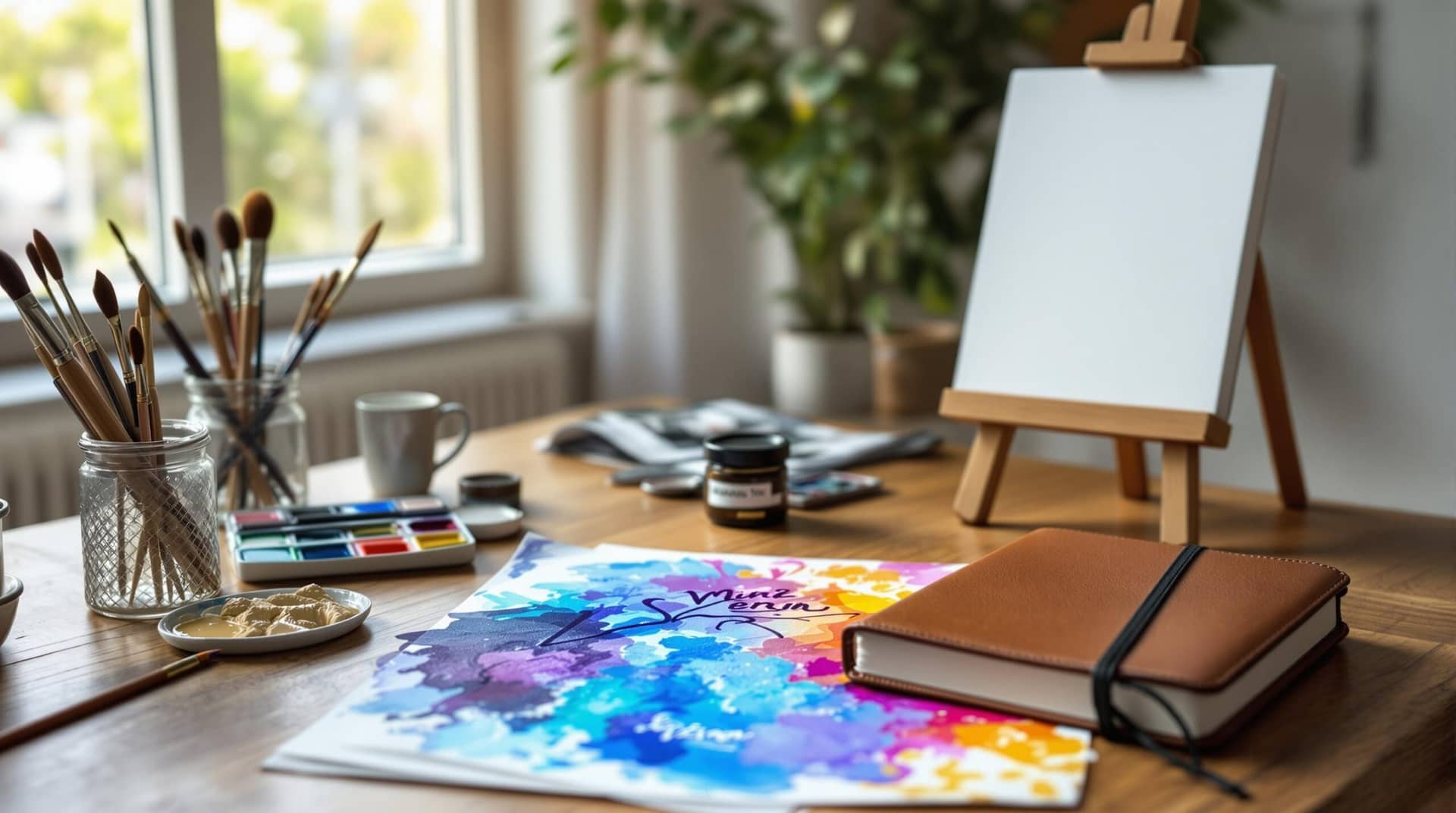
Start by keeping basic art supplies with your journal: colored pencils, markers, watercolors, magazine images for collage. You don’t need expensive materials or extensive selection. A few tools that feel pleasant to use are enough.
Notice when to shift from writing. If you’re writing the same thoughts repeatedly or feeling stuck in verbal loops, pause. Ask yourself: What color is this feeling? What shape? What texture? Let your hands respond without planning or analyzing.
You might discover that the tight spiral you draw reveals something about anxiety you hadn’t quite been able to name in words. The muddy brown-grey wash across a page might capture emotional exhaustion more accurately than any description. These moments of recognition—when the image shows you something language couldn’t reach—are exactly what makes creative expression valuable.
Mandala practice offers structured entry for people who feel intimidated by “free expression.” The contained circular format provides boundaries while allowing infinite variation within. Drawing repetitive patterns can be meditative, quieting anxious thoughts while your hands work. Notice what colors you choose, what patterns emerge, how the process feels in your body.
For processing difficult experiences, create something representing the experience without being literal. Maybe trauma feels like shattered glass—collage that. Maybe grief feels like an empty space surrounded by chaos—paint that. The visual representation externalizes internal experience, creating useful distance. You can look at it, move it, even put it away and return to it later.
You need permission structure. The therapeutic function doesn’t depend on technical skill. Stick figures and basic shapes serve the purpose just as well as sophisticated rendering. In fact, attempting “good art” can interfere with emotional honesty. You start making what looks right rather than what feels true.
Permission to create “bad art” is permission to be truthfully yourself. If you find yourself thinking “this looks terrible,” notice that voice and gently redirect attention to process rather than product. One common pattern looks like this: someone starts drawing, judges the result harshly, abandons the practice entirely. The judgment itself becomes the barrier, not the actual capacity for expression.
Art therapy works partly because it bypasses the internal critic that often censors verbal expression. The scribble that “looks like nothing” might be exactly what you needed to externalize overwhelming emotion. Beauty isn’t the point. Authentic expression is. Sometimes the value only becomes clear later, when you notice patterns across multiple pieces or when words finally arrive to describe what the image captured.
Integration approaches vary. Draw first, then write about what you notice in the image. Or write first, then create a visual response to what emerges in the words. Or alternate over time—some days visual, some days verbal—noticing over weeks and months which approach serves different emotional states. The goal isn’t rigid consistency but responsive flexibility.
Create safe containers for this work. Dedicate specific supplies to emotional exploration that you don’t have to share or explain to others. Schedule time when you won’t be interrupted, allowing both the making process and any reflection that follows. Consider whether you want to keep everything you create or whether some pieces serve their purpose in the moment and can be released afterward.
For people frustrated by “just talking about it” or repeatedly circling the same narratives in journals, research shows that adding visual or tactile elements opens new doorways into understanding. The shift isn’t abandoning words but recognizing that comprehensive emotional work often requires multiple expression channels working together. You might find that emotional journaling deepens when paired with visual elements, or that visual gratitude practices reveal appreciation in ways written lists don’t capture.
What Remains Unknown About Creative Expression for Emotions
While evidence demonstrates clear benefits, several areas need further investigation. Most research involves relatively small sample sizes. The significant emotional expression improvements came from a study of thirty participants. Larger studies across more diverse populations would clarify how broadly these findings apply and whether particular demographic groups experience different outcomes.
Long-term trajectory questions remain. Studies track months rather than years. Whether improvements persist, deepen, or plateau beyond five to seven years remains unexplored. Understanding longer patterns would help clarify whether creative expression tools require ongoing practice for sustained benefit or whether they create lasting changes in how people process emotion.
Research hasn’t adequately examined what benefits are accessible through informal integration into personal journaling versus what requires certified art therapist support. This distinction matters for people designing their own wellness practices. Understanding the boundaries—what’s safely self-guided versus what needs professional guidance—would help people make appropriate choices, particularly when working with trauma or severe mental health conditions.
Individual variation in response needs clarification. Factors predicting who benefits most from visual versus verbal versus movement-based creative approaches would enable more personalized recommendations. Some people naturally gravitate toward visual expression while others prefer sound, movement, or written word. Better understanding of these preferences would strengthen practical guidance.
Why Art Therapy Matters
Art therapy matters because emotions that stay unnamed tend to stay unmanaged. The practice creates distance between stimulus and response. That distance is where choice lives. Over time, patterns that once controlled you become patterns you can work with. This shift from reactive to responsive changes not just how you feel but how you relate to feeling itself. For those engaged in self-discovery work, creative expression offers pathways unavailable through verbal processing alone.
Conclusion
Art therapy provides neurologically distinct pathways for emotional expression that complement verbal processing, with research documenting significant improvements in emotional awareness, depression symptoms, and behavior regulation across diverse populations. You don’t need artistic talent to benefit from creative expression. The therapeutic value lies in authentic engagement with materials as thinking tools, not in producing aesthetically pleasing results.
If your journaling feels stuck in repetitive patterns, or certain emotions resist words, experiment with adding one visual element this week. A color wash representing your mood, a collage of images that capture something you can’t quite name, or simple shapes drawn while reflecting might reveal what language hasn’t yet reached. There’s no right way to begin—only your way, discovered through practice.
Frequently Asked Questions
What is art therapy?
Art therapy is a therapeutic approach using visual media like drawing, painting, and collage to access and process emotions when verbal expression feels blocked or incomplete, activating distinct brain pathways for emotion regulation.
Do I need artistic talent for art therapy to work?
No artistic skill is required. Therapeutic benefits depend on authentic expression, not technical ability. Stick figures and basic shapes serve the purpose as well as sophisticated rendering—process matters more than product.
How does art therapy differ from talk therapy?
Art therapy engages different neural networks than verbal processing, activating sensory-motor and affective brain pathways. It allows multiple contradictory emotions to coexist in one image without forcing linear coherence.
What emotions can art therapy help with?
Research shows art therapy helps with depression, anxiety, anger, grief, and trauma. Studies document significant improvements in emotional expression scores, with effects lasting months after intervention in various populations.
How do I start integrating art therapy techniques?
Keep basic supplies with your journal: colored pencils, markers, watercolors, or magazine images. When writing feels stuck, ask “What color is this feeling?” and let your hands respond without planning or analyzing.
What does research show about art therapy effectiveness?
Women with depression nearly doubled their emotional expression scores after art therapy intervention. 78% of hospitalized youth reported better understanding of thought-feeling connections, with 80% learning new expression methods.
Sources
- Journal of Psychology of Woman – Randomized controlled trial examining art therapy effects on emotional expression in women with depression
- NIH National Library of Medicine – Seven-year study of art therapy outcomes with hospitalized children and adolescents
- NIH National Library of Medicine – Review examining neural networks and brain pathways involved in creative emotional expression
- STAR Center – Overview of art therapy applications for mental health across diverse populations
- Authentic Growth Wellness – Discussion of art therapy benefits for emotional expression and healing processes
- EduMed – Analysis of art therapy impacts on mental health outcomes including resilience and identity development
