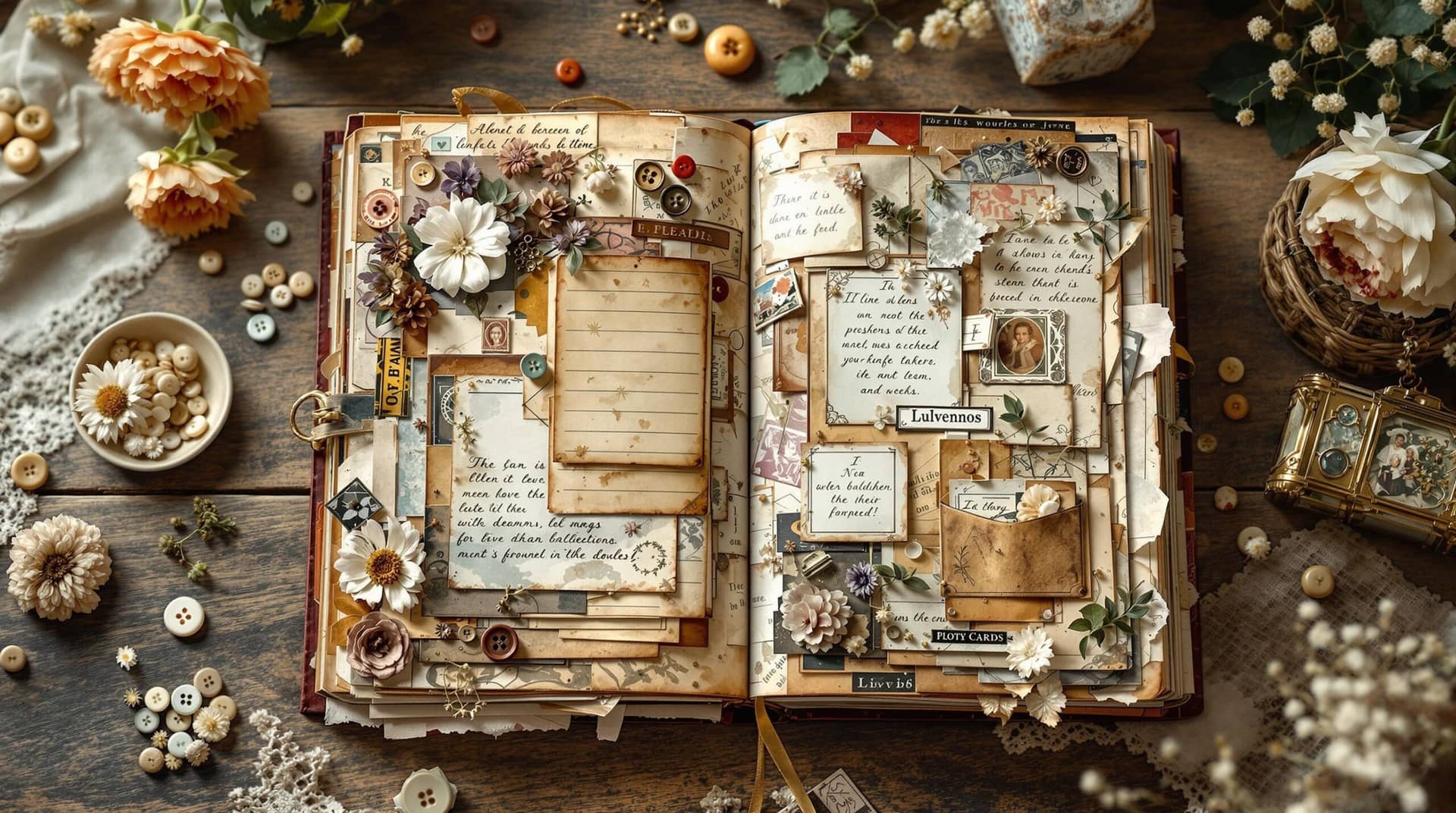
Maybe you’ve thrown away concert tickets that triggered specific memories, packaging from comfort purchases, or fabric scraps from clothes you’ve outgrown—without realizing these materials could become mirrors reflecting your inner landscape. Junk journaling transforms everyday ephemera into deeply personal artifacts, offering a creative practice that requires no artistic skill, expensive materials, or perfect prose. This guide explores how collecting and assembling discarded materials can reveal emotional patterns, support mindfulness, and build a tangible record of who you’re becoming.
Junk journaling is not scrapbooking with stricter rules. It is permission to create without judgment, using whatever catches your attention.
Quick Answer: Junk journaling is a rule-free creative practice that transforms everyday ephemera—ticket stubs, fabric scraps, magazine clippings, packaging, and other discarded materials—into personal reflection journals. Unlike traditional journaling, it combines writing, collage, and found objects to create tactile pages that celebrate imperfection while supporting mindfulness and emotional processing.
Definition: Junk journaling is a creative practice that repurposes discarded materials into visual, tactile pages blending writing, collage, and memory-keeping for self-reflection and emotional processing.
Key Evidence: According to Women’s Mental Health Podcast, junk journaling requires no special artistic skill or expensive materials, using recycled scraps to create meaningful memory-keeping that mental health advocates describe as a pathway to mindfulness and sustainable self-expression.
Context: The practice addresses common barriers to reflective journaling by removing performance anxiety and welcoming messy, experimental creation.
Junk journaling works because it externalizes internal experience through physical objects you’ve already connected with emotionally. Choosing what to save, arranging materials on a page, and layering textures creates distance between overwhelming feelings and reactive responses. That distance is where awareness lives. The sections that follow will show you how to start with materials you already have, how the practice supports pattern recognition over time, and why imperfection is the entire point.
Key Takeaways
- Zero barriers to entry — Start with materials already in your recycling bin; no artistic experience or expensive supplies required
- Mindfulness through tactile engagement — The physical act of sorting and arranging ephemera creates meditative states that support emotional regulation, as described by Women’s Mental Health Podcast
- Sustainability meets self-reflection — Repurpose discarded materials while discovering what you choose to save reveals personal values
- Memory preservation beyond digital — Physical mementos trigger emotional recall differently than photographs alone
- Permission to be imperfect — The messy, layered aesthetic normalizes experimentation and celebrates “failed” attempts as valid creative expression
What Makes Junk Journaling Different From Traditional Journaling
You might have started journals before that now sit half-empty on a shelf. That’s more common than you’d think. Traditional journaling can trigger perfectionism: the blank page demands coherent thoughts, complete sentences, insights worth preserving. Junk journaling sidesteps that pressure entirely.
According to Virta Health, the practice occupies the intersection of scrapbooking, art therapy, and mindfulness work. The materials landscape includes old magazines, junk mail, packaging from favorite products, fabric scraps from meaningful clothing, ticket stubs, receipts, dried flowers, old letters, maps, newspaper clippings, and coffee-stained napkins. Anything already headed for recycling becomes potential raw material.
The distinction from written journaling centers on process rather than product. The creative act itself facilitates reflection, not just the content. Choosing which ephemera to include, deciding how to arrange elements on a page, and physically gluing or taping materials creates what practitioners describe as a meditative state. Your hands stay busy while your mind processes what tends to come up when you slow down.
There’s no “wrong way” to glue a ticket stub next to a fabric scrap next to a torn magazine image that caught your eye for reasons you can’t quite name yet. Research by Painted Kat Art emphasizes that junk journaling addresses key challenges facing people interested in reflective journaling by providing visual and tactile entry points for those intimidated by blank pages, normalizing imperfection for perfectionists who’ve abandoned journals after missing days, and keeping hands busy while processing difficult emotions.

The Three-Part Appeal
The practice removes performance anxiety that keeps many from starting. When there’s no “wrong way,” you can begin without the story you’re telling yourself about not being creative enough or artistic enough. Sustainability aligns with contemporary values around waste reduction while creating containers for self-reflection, as noted by Love Paper.
For people processing trauma or overwhelming situations, the creative distance becomes especially valuable. Arranging found objects provides gentler emotional access than direct verbal expression, according to examples shared in YouTube tutorials about trauma processing through junk journaling. You’re working with your hands and instinct rather than forcing yourself to articulate what might not yet have words.
How Junk Journaling Supports Mental Wellness and Self-Discovery
The tactile engagement of sorting materials, arranging ephemera, and layering textures creates present-moment awareness. When you’re deciding whether the blue fabric scrap or the torn magazine corner belongs next to the concert ticket, you’re fully present with those materials. That presence is mindfulness without the pressure of sitting still.
According to Women’s Mental Health Podcast, this physical process supports emotional regulation in ways that purely cognitive reflection sometimes can’t access. The hands-on process itself becomes therapeutic, offering ways to notice what comes up without pressure of perfect prose. When direct confrontation with difficult feelings overwhelms, the creative act provides emotional distance while still honoring the weight of what happened.
Multi-sensory memory preservation works differently than digital archives. Combining writing, photos, found objects, and artistic elements documents experiences in ways that trigger emotional recall photographs alone don’t capture. Holding a concert ticket reconnects you to the anticipation you felt buying it, the crowd energy, the specific moment a lyric hit differently than expected. A dried flower from a meaningful walk carries the temperature of that day, the conversation you had, the clarity that arrived unbidden. These physical mementos become anchors to feeling states that fade from verbal memory.
Over time, patterns emerge. What you choose to save and how you arrange it tells stories about what matters to you. Maybe pages from difficult weeks include more text while easier periods show up as more visual and spacious. Perhaps you always include blue tones when feeling calm, or entries about specific relationships cluster around certain types of imagery. Visual records reveal emotional patterns that purely written entries might miss because you’re working with instinct and association rather than conscious analysis.
Community Without Competition
Online communities and social media platforms showcase diverse styles while emphasizing personal interpretation over prescribed methods. According to Joyful Art Journaling, the practice builds connection without comparative pressure. You’re encouraged to learn from others’ approaches (YouTube tutorials, Instagram sharing, collaborative “junk mail” exchanges) while following your own instincts about what resonates. The person whose elaborate vintage-themed pages inspire you isn’t grading your simpler collages. They’re showing you what’s possible, not what’s required.
Getting Started With Junk Journaling: Practical Steps
Grab any notebook or create one by folding and stapling paper together. Begin collecting ephemera that catches your attention. According to Virta Health, you can start with what’s already in your recycling bin. Old magazines become image sources. Junk mail provides interesting typography and unexpected color combinations. Packaging from products you love carries associations with comfort or pleasure. Fabric scraps from clothes you’ve outgrown hold memories of who you were when you wore them.
Keep a collection box so materials accumulate without conscious effort. Ticket stubs from memorable outings, receipts from meaningful purchases, dried flowers or leaves from significant walks, maps from trips, newspaper clippings that struck you, old photos you don’t need pristinely preserved, stickers, stamps, even coffee-stained napkins. If it catches your attention, it belongs in the box.
For self-reflection work, create pages around emotional themes. Notice what images or textures you’re drawn to when feeling anxious versus calm versus excited. Use prompts like “What I want to remember about this season” or “Things that made me feel seen this week,” then respond through whatever combination of writing, collage, and found objects feels right. The process reveals as much as the product. Why did you choose that image? What made you tear it that particular way? What does the layering say about how these elements relate?
Travel documentation naturally fits junk journaling. Collect maps, tickets, packaging from local products, pressed flowers from meaningful places, and photos printed on regular paper that you can tear and layer. Research from Painted Kat Art shows that the imperfect, assembled quality often captures travel feelings more effectively than polished scrapbook pages. The coffee stain from the café where you had that conversation, the torn map corner from getting lost, the receipt from the meal that tasted like home: these accidents and imperfections hold memory.
One common pattern looks like this: someone discovers junk journaling, feels excited about the possibilities, then waits to start until they have “better” materials or clearer vision. Months pass. The excitement fades. The practice never begins. Waiting defeats the point. Junk journaling works through doing, not planning.
Watch for other common mistakes. Comparing your early attempts to experienced practitioners’ polished online examples misses that they’re showing finished products, not the experimental process that got them there. Making pages too precious, afraid to “mess them up,” contradicts everything junk journaling offers. Layer over things. Tear pages. Glue things crooked. Let coffee stain your work. These imperfections are features, not bugs.
Draw inspiration from others but translate through your own instincts rather than copying techniques that don’t resonate. Notice what comes up during the process itself: your choices about what to include and how to arrange it often reveal as much as written reflection. If you miss a week, or a month, your journal will still be there when you come back. No judgment. No catching up required.
The Current Landscape and Future of Junk Journaling
Junk journaling exists as a grassroots creative movement rather than a formally studied therapeutic modality. It thrives primarily through online communities, social media sharing, and hobbyist networks rather than academic validation. While mental health advocates describe benefits around stress reduction and emotional processing, these claims lack the quantitative backing that would establish junk journaling as an evidence-based intervention. Peer-reviewed research remains limited and anecdotal.
This knowledge gap doesn’t diminish the practice’s value for people who find it meaningful. It does mean we should remain curious and cautious about overstating what we know about how and why it works. The mechanisms make intuitive sense (tactile engagement, mindfulness, creative expression, pattern recognition), but intuition isn’t the same as empirical validation.
Cultural context matters here. The rise of digital photography and social media paradoxically intensified interest in tangible memory-keeping. As photo libraries grew impossibly large and ephemeral posts replaced physical keepsakes, some people turned toward junk journaling as an antidote to digital overwhelm. The practice offers a physical container with inherent limits that requires choosing what to save and how to honor it, rather than documenting everything and curating nothing.
The practice is gaining visibility as part of a broader cultural shift toward mindfulness practices that accommodate modern attention patterns. Visual and tactile elements provide anchors for wandering minds, making the practice accessible to people who struggle with traditional meditation or purely verbal reflection. You don’t need to sit still or empty your mind. You need materials and permission to experiment.
Sustainability will likely strengthen junk journaling’s appeal, particularly among younger generations navigating climate anxiety and seeking ways to reduce waste in daily life. According to Love Paper, the practice occupies a rare intersection where personal growth work and environmental values reinforce each other rather than competing for attention or resources.
Future therapeutic integration seems possible. As art therapy gains recognition in formal mental health settings, junk journaling’s accessible, non-intimidating approach could serve as a bridge for clients hesitant about traditional talk therapy. The practice’s flexibility allows adaptation for various therapeutic goals: trauma processing, gratitude cultivation, pattern recognition in emotional responses, identity exploration.
Social media presents a tension. The platforms that spread inspiration and build community also risk creating pressure. As online examples become more sophisticated, beginners might feel intimidated rather than invited. The challenge will be maintaining junk journaling’s core invitation to imperfection even as the most visible examples become increasingly polished.
Why Junk Journaling Matters
Junk journaling matters because emotions that stay unnamed tend to stay unmanaged. The practice creates distance between stimulus and response through creative engagement rather than cognitive analysis. That distance is where choice lives. Over time, patterns that once controlled you become patterns you can work with, not because you’ve eliminated difficult feelings but because you’ve learned to recognize them earlier, understand their triggers, and respond with intention rather than reactivity.
Conclusion
Junk journaling transforms the act of saving ephemera from unconscious accumulation into intentional self-discovery. The concert tickets, fabric scraps, packaging, and clippings you might otherwise discard become raw materials for understanding your inner landscape. What you choose to preserve and how you arrange it tells stories about what matters most. Unlike journaling methods that trigger perfectionism or performance anxiety, this practice celebrates messy experimentation and tactile engagement, offering accessible entry points to mindfulness and emotional processing.
While formal research remains limited, practitioners consistently describe junk journaling as a meaningful pathway to sustainable self-expression that honors both environmental values and personal growth. Start with whatever materials you already have. Your recycling bin holds more creative potential than you realize. For more inspiration, explore our guides on junk journaling techniques, art journaling ideas, and creative journaling approaches.
Frequently Asked Questions
What is junk journaling?
Junk journaling is a creative practice that repurposes everyday ephemera like ticket stubs, fabric scraps, magazine clippings, and packaging into personal reflection journals, combining writing, collage, and found objects without rules or artistic requirements.
How is junk journaling different from traditional journaling?
Unlike traditional journaling that requires coherent writing on blank pages, junk journaling uses tactile materials and visual elements to facilitate reflection, removing performance anxiety and perfectionism while creating meditative engagement through hands-on creation.
What materials do I need to start junk journaling?
Start with any notebook and materials from your recycling bin: old magazines, junk mail, packaging, ticket stubs, fabric scraps, dried flowers, receipts, maps, and coffee-stained napkins. No expensive supplies or artistic experience required.
How does junk journaling support mental wellness?
The tactile process of sorting and arranging materials creates present-moment awareness and emotional regulation. Physical engagement provides gentle access to difficult feelings while the creative distance helps process overwhelming emotions without forcing verbal expression.
Is there a wrong way to do junk journaling?
No, junk journaling celebrates imperfection and messy experimentation. Layer materials crooked, let coffee stain pages, tear elements freely. These “imperfections” are features that normalize creative risk-taking and eliminate performance pressure.
What patterns can I discover through junk journaling?
Over time, your material choices and arrangement styles reveal emotional patterns: color preferences during different moods, visual versus text-heavy pages during various life phases, and recurring imagery around specific relationships or experiences.
Sources
- Virta Health – Introduction to junk journaling basics, materials, and accessibility for beginners
- Painted Kat Art – Coverage of junk journaling as life documentation and memory preservation
- Women’s Mental Health Podcast – Analysis of mental wellness benefits and mindfulness applications
- Love Paper – Perspective on sustainability aspects and cultural trends
- Joyful Art Journaling – Community practices and creative approaches
- YouTube Tutorial – Practical example of trauma processing through junk journaling
