
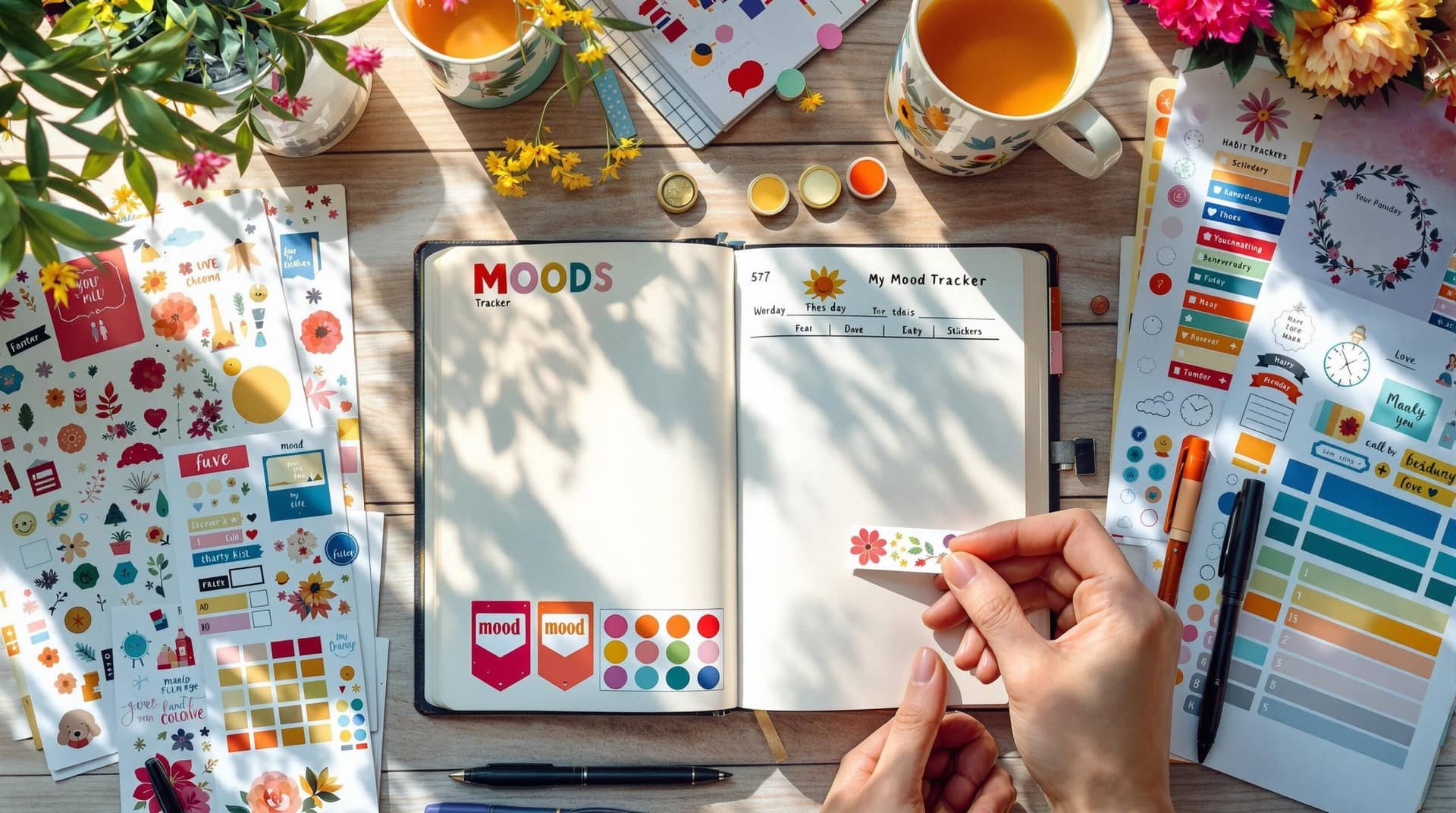
Maybe you’ve walked past the sticker aisle and wondered if those colorful sheets belong in your journal, or if that feels too playful for the serious work of self-reflection. The truth is, journaling stickers have transformed from simple decorations into specialized tools that support pattern recognition and emotional processing. Research shows they activate different brain regions than writing alone, potentially enhancing memory retention and creating visual anchors for complex feelings. Whether you’re tracking moods for therapy work, building habits, or expressing creativity on the page, the right supplies make self-reflection accessible without requiring artistic skill.
Quick Answer: Journaling stickers are specialized adhesive decorations designed for personal journals, featuring acid-free materials that prevent page yellowing and thinner profiles that reduce bulk, serving both functional purposes like habit tracking and mood documentation, and creative expression without requiring artistic ability.
Definition: Journaling stickers are adhesive visual elements engineered specifically for long-term journal keeping, combining archival-quality materials with designs that support self-reflection, pattern recognition, and emotional processing.
Key Evidence: According to Forbes Health via Journaling Insights, visual triggers from stickers strengthen habit loops, making them effective tools for behavior change in routine tracking.
Context: These supplies have evolved beyond decoration into legitimate tools for self-awareness and therapeutic work.
Journaling stickers are not mere decoration or craft supplies. They are structured visual tools that externalize internal states, creating distance between experience and observation. When you place a mood sticker, you’re translating feeling into visible pattern. Over time, those patterns reveal rhythms you might not notice day to day. The sections that follow will walk you through exactly how to choose supplies that match your journaling purpose, whether that’s therapeutic tracking, creative expression, or building sustainable habits you can observe without judgment.
Key Takeaways
- Material quality matters: Acid-free stickers prevent journal deterioration and page yellowing over time, preserving your reflections for years.
- Functional versus decorative: Choose between organizational tools like habit trackers and mood logs, or aesthetic elements based on your journaling goals.
- Sensory benefits: Textured stickers provide tactile grounding for anxiety management and focus support during difficult moments.
- Pattern recognition: Consistent color-coding and placement reveal behavioral patterns invisible in moment-to-moment entries.
- No artistic skill required: Pre-made designs offer accessible entry points for visual self-expression and memory keeping.
What Makes Journaling Stickers Different from Regular Craft Stickers
You might notice when you first place a craft sticker in your journal that the page won’t lie flat anymore. That thickness matters more than it seems when you’re working with a practice you’ll return to daily. Journaling stickers feature acid-free materials to prevent page yellowing and thinner profiles (usually under 0.5mm) to reduce bulk, making them specifically engineered for practices like bullet journaling, gratitude work, and emotional tracking.
Regular craft stickers often use acidic adhesives that degrade paper over time, leaving brown stains that obscure your writing. Their thickness creates bulk that prevents journals from closing properly, and their materials prioritize short-term projects rather than preserving your reflections for years to come.
The functional category includes habit trackers for behavior monitoring, mood documentation tools that help you notice emotional patterns, scheduling elements for time awareness, and section tabs that create visual boundaries between different types of reflection. According to Journaling Insights, these practical tools support therapy and recovery work where tracking what tends to show up reveals patterns that might otherwise remain invisible. You’re not grading yourself on completion but gathering data about your rhythms and obstacles.
Decorative categories serve equally valid purposes. Aesthetic themes like florals, quotes, seasonal motifs, or minimalist patterns allow personal expression for those who struggle with drawing or feel intimidated by blank pages. Many of us discover that choosing stickers becomes a reflection practice itself, revealing preferences and emotional states through color, theme, and placement choices.
Material innovation continues expanding options. Repositionable silicone stickers accommodate those who change their minds. Textured varieties address sensory needs. Interactive flip-up designs reveal hidden prompts that turn decoration into conversation starters with yourself. These specialized features reflect growing recognition that journaling supplies can actively support self-discovery rather than simply adorn it.

The Science Behind Visual Journaling Tools
Consider how your brain processes a page full of text versus a page that combines words with visual elements. Research by James Pennebaker and colleagues shows that engaging with visual elements like stickers activates different brain regions than writing alone, potentially strengthening memory retention and emotional processing. This neural diversity suggests that combining visual and written reflection creates more comprehensive self-knowledge than either approach alone.
Visual anchoring improves information categorization. When you flip back through weeks of entries and see patterns in color or icon placement, your brain recognizes connections faster than rereading paragraphs. Achievement markers trigger dopamine release that reinforces continued engagement with your practice. Over time, patterns that once controlled you become patterns you can work with.
Matching Sticker Types to Your Journaling Style
For therapeutic and recovery work, mood trackers create visual timelines that reveal emotional patterns invisible in the moment. Stepping back to view a month of sticker placement often shows what tends to accompany difficult periods: sleep disruption before low moods, social connection preceding better days. Habit observation stickers work best when framed as data rather than judgment. The distinction involves asking not “did I succeed or fail” but “what does this pattern reveal about my rhythms and obstacles.”
A common pattern looks like this: You start tracking sleep with small moon stickers, noting whether you got to bed before midnight. After a few weeks, you notice the red mood stickers cluster on days following late nights. That’s not failure. That’s information about what your system needs to function well. Achievement markers acknowledge effort regardless of outcome, providing compassionate accountability that supports self-awareness without self-criticism.
Findings from Psychology Today via Journaling Insights confirm that stickers provide visual reinforcement particularly effective for therapy work where tracking reveals patterns that might remain invisible in text alone. When words fail to capture complex emotional states, visual choices may communicate what remains verbally inaccessible.
Bullet journaling relies on functional organization tools including priority flags, energy level indicators, and relationship pattern markers that support granular awareness. The Craft Industry Alliance reports continued growth in bullet journal stickers among millennials and Gen Z through 2025, reflecting expanding acceptance of visual self-expression as valid personal development work. This specificity supports deeper pattern recognition over time, particularly for those doing work where subtle shifts matter.
For gratitude and memory keeping, commemorative stickers highlight moments worth remembering without requiring elaborate writing. Sticker dumping techniques, where you layer multiple elements to create memory visualizations, offer their own form of emotional processing. This practice, popular in enthusiast communities on platforms like Lemon8, represents growing recognition that the process of selecting and arranging stickers provides valid self-expression, particularly for those who struggle with verbal articulation of complex feelings.
Textured stickers provide sensory benefits for calm, focus, and well-being. Research from Textured Stickers shows that individuals managing anxiety or ADHD often use these as mindfulness tools offering tactile grounding during emotional processing. These supplies acknowledge that journaling serves multiple purposes simultaneously: the act of placing a textured sticker provides immediate regulation while creating visual record of moments when grounding was needed. This dual function makes them especially valuable for those doing recovery or therapy work.
Most of us benefit from combining categories. You might use functional mood trackers alongside decorative seasonal themes, or pair habit markers with textured elements for sensory support. The selection principle involves choosing based on whether you need organizational support, emotional tracking, creative expression, or sensory regulation, then noticing how those needs shift over time.
Color-Coding Systems for Pattern Recognition
Strategic use of consistent colors across time helps patterns emerge. You might use blue for reflective writing, green for gratitudes, specific icons for therapy insights. The long-term benefit shows when flipping through past pages reveals patterns without rereading every entry.
Choose intuitive color associations that feel right to you rather than following prescribed systems. If purple feels like calm to you but anxiety to someone else, trust your own associations. And if you miss a week or change your mind about what purple means, that’s information too. Avoid visual clutter by limiting your palette to four or five core colors that carry meaning for you.
Practical Selection and Application Strategies for Journaling Stickers
When selecting materials, verify acid-free composition for archival quality. Check thickness specifications: under 0.5mm works best for journals that need to close flat. Test adhesive strength on spare paper before committing to journal pages, especially if you’re using a notebook with thin paper that might tear. Some adhesives bond permanently while others allow repositioning, and knowing which you’re working with prevents frustration.
Match sticker dimensions to your journal format. Smaller stickers between half an inch and one inch work better for pocket journals where space is limited. Larger elements from one and a half to two inches suit A5 or letter-size spreads where you have room to build visual compositions. This sizing consideration matters more than it might seem: oversized stickers in small journals create cramped pages that feel overwhelming rather than supportive.
Common mistakes include using non-acid-free craft stickers that yellow pages over time, creating visual clutter rather than meaningful organization, and falling into perfectionism traps where aesthetics matter more than reflection. According to Journaling Insights, the purpose isn’t Instagram-worthy pages but rather tools for noticing what comes up for you. If your sticker placement feels more like performance than observation, that’s worth examining.
For therapy work, place mood stickers daily to create visual timelines. Use habit markers to track what tends to happen rather than judging success or failure. Pair visual elements with brief writing that processes the story you’re telling yourself about what the patterns reveal. This combination of visual data and written reflection often surfaces insights that either approach alone might miss.
Sticker dumping for emotional expression works differently. Dedicate occasional sessions to layering multiple stickers without overthinking, allowing visual choices to reflect your current emotional state. The practice, described by users on Lemon8, creates memory visualizations that capture moments when words feel impossible. You might discover that the colors and themes you reach for during these sessions reveal patterns about what you need when language fails.
Integration with writing matters. Use stickers as conversation starters with yourself. Ask why you chose this color today, or what pattern you notice in this week’s selections. The visual elements become prompts for deeper reflection rather than replacements for it. This approach works particularly well when you’re feeling resistant to journaling: sometimes placing a single sticker maintains connection to the practice without the pressure of filling pages.
Digital platforms like GoodNotes now offer draggable sticker elements, as noted by Journaling Insights. This addresses some physical limitations like bulk and permanence, though sensory and emotional differences exist between placing physical stickers and tapping digital icons. The tactile experience of peeling and pressing might offer grounding that digital selection doesn’t provide, but digital options allow experimentation without commitment.
For budget management, start with one functional and one decorative set, typically five to fifteen dollars each, rather than overwhelming yourself with options. You can always expand later as you discover what supports your practice. Many journalers find that a small, carefully chosen collection serves them better than drawers full of unused stickers that create decision fatigue.
Best practices for self-reflection involve color-coding categories intuitively, dedicating sessions to sticker dumps where visual choices reflect current state, and using textured varieties during difficult moments for immediate sensory grounding alongside visual documentation. The key insight from Textured Stickers involves recognizing that placement itself can be therapeutic, not just the record it creates.
You can also explore the best journaling tools for 2025 to see how stickers fit within broader supply choices, or check out recommended pens for journaling that pair well with sticker-based layouts.
Emerging Trends and Environmental Considerations
Looking toward 2025, interactive elements like reveal windows are adding playfulness to reflection work. These designs include flaps you lift to discover prompts or affirmations, turning static decoration into dynamic conversation. Increased specificity in functional stickers now includes priority flags, energy indicators, and relationship pattern markers that support granular awareness of different life domains.
According to Olfanotes, this trend reflects growing recognition that self-understanding requires tracking multiple dimensions simultaneously. You’re not just tracking mood or habits in isolation, but beginning to see how sleep, social connection, physical activity, and emotional state influence each other.
The sustainability movement addresses environmental concerns about single-use adhesives. Growing demand exists for eco-friendly reusable stickers, though these options remain less common in the current market. This gap presents both challenge and opportunity as journaling communities increasingly prioritize materials that align with their values around environmental responsibility.
Sensory applications represent the fastest-growing category. Textured designs for stress management and focus support acknowledge that sticker placement itself provides immediate regulation while creating visual records. Research from Textured Stickers confirms that this dual function serves those doing recovery or therapy work particularly well, offering grounding in difficult moments without requiring additional journaling time.
Community influence shapes product development. Platforms like Lemon8 host exchanges about themed collections and sticker dumping techniques, driving supplier innovation toward user-requested features. This feedback loop between journalers and manufacturers means supplies increasingly reflect actual needs rather than assumed preferences.
Research gaps remain. Limited formal study exists on long-term therapeutic efficacy compared to text-only journaling.
Frequently Asked Questions
What are journaling stickers?
Journaling stickers are specialized adhesive decorations designed for personal journals, featuring acid-free materials that prevent page yellowing and thinner profiles to reduce bulk, serving both functional and creative purposes.
How are journaling stickers different from regular craft stickers?
Journaling stickers use acid-free materials to prevent page degradation, feature thinner profiles under 0.5mm to avoid bulk, and are specifically engineered for long-term journal keeping rather than short-term craft projects.
What is sticker dumping in journaling?
Sticker dumping is a technique where you layer multiple stickers without overthinking to create memory visualizations, allowing visual choices to reflect your current emotional state when words feel impossible.
Do journaling stickers actually help with emotional processing?
Research shows that visual elements like stickers activate different brain regions than writing alone, potentially strengthening memory retention and emotional processing while creating visual anchors for complex feelings.
What size journaling stickers work best for different journal formats?
Smaller stickers between half an inch and one inch work better for pocket journals, while larger elements from one and a half to two inches suit A5 or letter-size spreads where you have room for visual compositions.
Can textured journaling stickers help with anxiety management?
Yes, textured stickers provide tactile grounding during emotional processing and are particularly effective for individuals managing anxiety or ADHD, offering immediate sensory regulation while creating visual records.
Sources
- Journaling Insights – Comprehensive overview of sticker types, materials, psychological research, and functional applications in various journaling practices
- Olfanotes – 2025 trends in bullet journal stickers, including interactive elements and industry growth patterns
- Lemon8 – Lilbugaj – Community practices around sticker dumping and memory visualization techniques
- Textured Stickers – Sensory applications of textured stickers for anxiety, ADHD, and well-being support
- Lemon8 – Nixole – Visual journaling techniques and themed sticker application practices
