
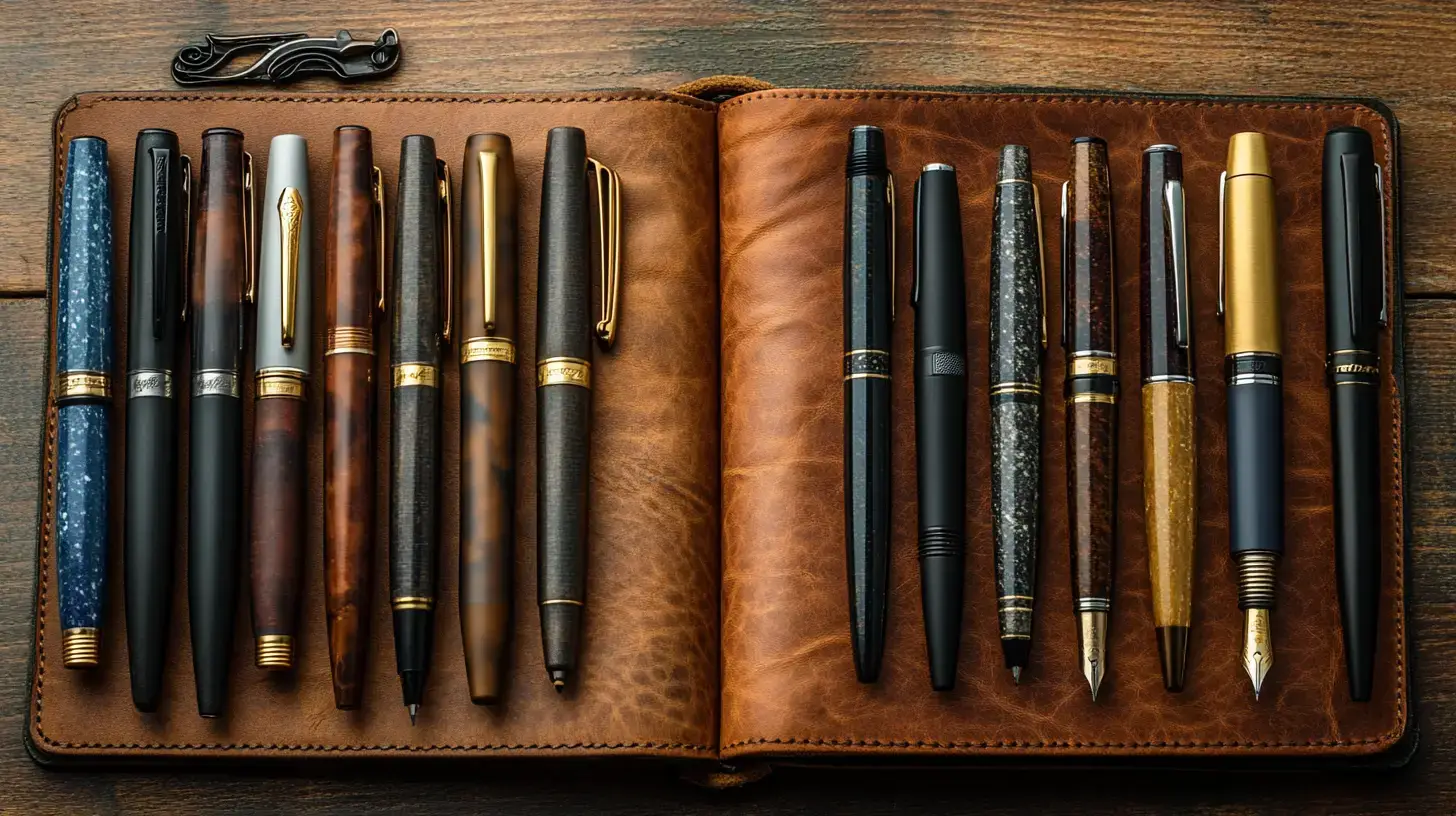
The best pens for journaling aren’t about prestige or price. They’re about reducing physical strain, working harmoniously with your paper, and feeling inviting enough to bring you back to the page when thoughts feel heavy or scattered. Maybe you’ve noticed how a pen that glides smoothly makes it easier to stay with difficult feelings, while one that skips or requires pressure can shut down the flow before you’ve even started.
The best pens for journaling are not luxury items that demand perfection. They are tools that remove friction between you and the page.
This guide reveals what different pen types offer and how to match tools to your specific needs, whether you’re working through difficult emotions, tracking patterns in your thinking, or simply making sense of your days.
Quick Answer: The best pens for journaling are gel pens like Paper Mate InkJoy for smooth, comfortable writing; fineliners like Sakura Pigma Micron for archival quality and low bleed-through; and entry-level fountain pens like Pilot Metropolitan for ritualistic, mindful practice, with the ideal choice depending on your paper, hand comfort, and emotional needs.
Definition: The best pens for journaling are writing instruments that balance smooth ink flow, physical comfort during extended use, and paper compatibility to support consistent self-reflection practices.
Key Evidence: According to Print Smitten, testing shows that affordable pens like Paper Mate InkJoy Gel 0.5 often outperform premium options, ranking as the pen reviewers “personally reach for” when writing in memory books.
Context: Pen choice shapes your relationship with the practice, not just how words appear on the page.
Research shows handwritten expressive writing produces greater reductions in depressive symptoms at one-month follow-up compared to keyboard writing, making the pen you choose genuinely consequential for emotional processing. A randomized trial of 71 adults found that while both methods reduced immediate negative affect, handwriting led to deeper therapeutic outcomes. The physical act of moving a pen across paper appears to engage cognitive processes differently than pressing keys, supporting the kind of pattern-recognition and self-reflection many journalers seek.
The best pens for journaling work through three mechanisms: they reduce physical resistance so your hand stays relaxed, they prevent smearing or bleeding that creates visual frustration, and they feel inviting enough to lower the barrier when facing the page feels hard. That combination reduces the cognitive load around the physical act of writing, allowing more attention for emotional processing. The benefit comes from removing small barriers that compound over time.
Key Takeaways
- Gel pens provide the smoothest flow for long writing sessions without hand fatigue, with professional testing favoring them for comfort during extended emotional work
- Fineliners (0.3-0.5mm) deliver crisp lines with minimal bleed-through on most journal paper, making them reliable for people who blend writing with doodling or visual tracking
- Fountain pens transform writing into ritual but require compatible paper to prevent feathering, offering a sensory experience that some find grounding
- Grip diameter affects muscle load in your hand and forearm, with larger barrels reducing strain during sessions when you’re releasing tension through words
- Pigment-based inks resist fading and water damage for journals you want to preserve long-term, protecting records of grief, recovery, or therapeutic milestones
Why Your Pen Choice Matters for Journaling
You might have noticed how some pens make your hand tense up within minutes, while others let you write for pages without thinking about the tool at all. That difference isn’t trivial when you’re working through something difficult on the page. Functional MRI research reveals greater brain activation in memory and learning regions when writing by hand versus typing, and a study of 36 adults demonstrated that pen grip diameter affects muscle load in the hand and forearm. According to James Pennebaker’s research on expressive writing, larger-diameter pens reduced activity in overused muscles, which matters when you journal extensively or carry tension during emotional release writing.
The emotional processing difference shows up in measurable outcomes. Research published by the American Psychological Association found that handwritten expressive writing produced greater reductions in depressive symptoms at one-month follow-up compared to keyboard writing. Both methods reduced immediate negative affect, but handwriting facilitated deeper therapeutic work over time. This establishes that the pen-on-paper experience isn’t merely aesthetic or nostalgic; it may genuinely support the kind of emotional processing people turn to journaling to access.
Physical comfort shapes whether you can sustain the practice when writing feels difficult. That tightness in your hand when you’re working through something hard isn’t separate from the emotional work. It’s part of how your body holds what you’re processing. The pen you choose influences your entire relationship with the practice. Tools that reduce strain and feel inviting help you return to the page when working through difficult emotions, while pens that require constant pressure or smear across your hand can become one more source of friction in an already challenging process.

The Three Core Pen Categories for Journaling
Gel pens offer smooth, comfortable flow ideal for long sessions. The water-based gel ink glides across paper with minimal pressure, though left-handers need quick-dry formulas to avoid smudging. These pens dominate community recommendations for a reason: they feel effortless in ways that matter when you’re already expending energy to face what’s on your mind.
Fineliners use water-based ink in precise tips (0.3-0.5mm) for detailed work with minimal bleed-through. Archival pigment options preserve records that matter, making them reliable choices for therapy documentation or grief journals you want to protect from fading. The consistent line width can feel grounding when thoughts scatter.
Fountain pens provide a low-pressure glide that encourages intentional writing, but they demand thicker paper and maintenance commitment. For some people, the ritual of filling a pen and caring for it becomes part of the practice itself, a small act of tending to tools that tend to your inner world.
Best Pen Types and Specific Recommendations
Professional testing reveals clear patterns in what works. According to Big Red Illustration’s comprehensive synthesis, gel pens are favored for comfort and smooth flow in long writing sessions, fineliners with water-based ink are recommended for detailed journaling and drawing with low bleed-through, and fountain pens are highlighted for a ritualistic, mindful feel. These aren’t arbitrary preferences; they reflect how different ink delivery systems interact with the physical experience of sustained writing.
Top gel performers include Paper Mate InkJoy and Pilot G2, which appear in community recommendations for smooth writing without hand fatigue. What’s striking is that affordable options perform as well as premium pens in blind testing. You don’t need to spend significantly to access tools that support your practice. The Paper Mate InkJoy costs a fraction of designer pens but delivers the glide that keeps you on the page.
For archival quality, comprehensive testing found that Pigma Micron 005 and 03 and Zig Memory System Vellum Writer performed best for crisp lines and permanence on typical journal paper. These fineliners use pigment-based ink that resists water and fading, which matters if you’re keeping records you want to revisit years later. Grief journals, recovery milestones, therapy insights deserve ink that won’t disappear.
Entry-level fountain pens open the practice to people who might assume fountain pens are precious objects requiring expertise. Expert guides highlight Pilot Metropolitan and Platinum Preppy as reliable starter fountain pens that give a smooth, low-pressure feel and encourage slower, more intentional writing. The Platinum Preppy costs less than many gel pens but offers the sensory experience some people find transforms their relationship with the page.
Inexpensive pens often perform as well as premium options. Paper Mate InkJoy Gel 0.5 ranked second overall in testing and was the pen reviewers personally reached for when writing in memory books. This finding removes the barrier of believing you need expensive tools to journal properly, a particularly important message for people whose perfectionism already makes starting difficult.
Matching Ink Type to Your Paper
Materials science reveals why some pens bleed through while others don’t. Ballpoint ink is oil-based and requires more pressure, but it resists smudging. Gel ink is water-based gel that flows smoothly but smears more easily. Rollerball ink is liquid water-based and glides most freely but can feather on thin paper. These aren’t quality differences; they’re trade-offs in how ink interacts with paper fibers.
Understanding these interactions helps you match pen to paper rather than assuming bleed-through means you chose the wrong tool. It’s an interaction problem, not a failure. Moleskine journals show ghosting and bleed with wetter inks, while Rhodia, Leuchtturm1917, and Midori papers handle the same pens without issue. The pen isn’t defective. The pairing needs adjustment.
A practical rule: Wetter inks need thicker paper like Rhodia or Leuchtturm1917. Ballpoint and fine-tip gel (0.5mm or smaller) work on any journal. If you already have a journal you love and a pen that bleeds through, try a finer tip of the same pen type before replacing either one. Often that shift alone solves the problem.
Practical Guidance for Choosing Your Journaling Pens
The invitation here is to experiment mindfully rather than purchase perfectly. Consider acquiring 2-3 different pen types and simply noticing what happens when you use each. You might try a smooth gel or entry-level fountain pen for sessions when you want to slow down and sink into feelings; the glide of the pen can mirror the gentleness you’re practicing toward yourself. Keep a fine fineliner or reliable ballpoint for days when thoughts feel scattered and you need more structure. The slightly greater feedback as pen meets paper can help you feel grounded.
Physical comfort tracking reveals patterns you might not notice consciously. Monitor which pens make your hand tense over several weeks. If you notice strain building during emotional writing, experiment with chunkier pens or soft grips. The tension in your hand isn’t separate from what you’re working through; reducing physical strain can create more space for difficult feelings to surface without your body shutting down the process.
Left-handers face specific challenges that can make emotionally demanding writing even harder. Choose faster-drying options and finer tips (0.5mm or smaller) to reduce smudging frustration. Dragging your hand through wet ink isn’t just annoying; it’s one more barrier between you and the page when you’re already working to face what’s there. Quick-dry gel or ballpoint removes that particular source of friction.
For journals you want to preserve long-term, archival needs matter. Grief journals, therapy documentation, recovery milestones deserve pigment-based inks like Sakura Pigma Micron fineliners designed for permanence. The added cost is minimal, and future-you may be grateful that the evidence of your healing hasn’t faded when you return to those pages years later.
Color use can serve your practice in ways beyond decoration. Try muted tones like grays, soft blues, or earth colors that feel less loud for emotional work. Some people experiment with multiple colors analytically: one for inner critic thoughts, another for compassionate responses, a third for body sensations. This visual tracking can help patterns become visible without having to remember everything consciously. Over time you might notice that certain themes appear in particular moods, or that the inner critic speaks in predictable situations.
Common mistakes to avoid: Don’t assume expensive means better for your specific needs. Many affordable pens outperform premium options in comfort and reliability. Don’t match pen to ideal conditions; match it to your actual paper, your actual hand tension, your actual schedule. And don’t let tool selection become another site of perfectionism. The pen that gets you to the page is doing its job, even if pen enthusiasts might choose differently.
The best pen reveals itself through use. Notice which tools you reach for when writing feels hard. Notice what colors show up in different emotional states. Notice when you’re more willing to return to journaling: was it after a session with a pen that felt smooth, or that made your handwriting look gentler than usual? These small observations are data about what supports your practice.
For more guidance on matching pens to specific journaling styles, see our guide on pens for bullet and creative writing.
Emerging Trends in Journaling Pen Selection
Sustainability is reshaping how people think about journaling tools. Growing interest in fountain pens with converters or piston fillers and refillable gel pens allows people to frame tool choices as aligned with environmental values. This shift matters because it lets you integrate care for the environment with care for yourself; the tools you use for inner work can reflect the world you’re trying to build through that work.
Hybrid ink technologies are addressing long-standing frustrations. Products like Uni Jetstream’s low-viscosity ballpoint combine gel smoothness with ballpoint quick-dry reliability, responding to left-handers and fast writers who’ve felt underserved by traditional options. These technical innovations recognize that smearing isn’t just annoying; it can be a barrier that keeps people from sustaining their practice.
Accessibility is receiving more explicit attention in mainstream recommendations. Pens designed for neurodivergent users or people with fine-motor challenges, featuring thicker barrels, weighted bodies, and soft grips, are moving from specialized catalogs into general stationery discussions. The acknowledgment that anxiety and trauma can manifest as hand tension makes ergonomic design a mental health consideration, not just a comfort preference. Your body holds what you’re processing, and tools that reduce physical strain create space for emotional work.
The market itself is bifurcating in interesting ways. On one side, ultra-premium pens marketed as luxury goods. On the other, explicit celebration of inexpensive workhorses. The middle ground (moderately priced nice pens) seems to be losing cultural resonance in favor of either treating yourself to ritual objects or removing cost as a barrier entirely. This polarization reflects different relationships people have with their practice: journaling as sacred ritual versus journaling as accessible daily tool.
The current moment shows tools aligning with values: caring for the environment as part of caring for oneself, and ergonomic design as a mental health consideration rather than mere convenience. These shifts make pen selection less about status and more about finding tools that genuinely support the difficult, necessary work of self-understanding.
To explore how different ink types perform across various paper types, read our comparison of gel versus fountain versus ballpoint pens.
Why the Best Pens for Journaling Matter
The best p
Frequently Asked Questions
What makes a pen ideal for journaling?
The best journaling pens provide smooth ink flow with minimal pressure, reduce hand strain during long writing sessions, and work well with your journal paper without bleeding through or smearing.
What is the difference between gel pens and fountain pens for journaling?
Gel pens offer effortless flow and quick-dry convenience, while fountain pens provide a ritualistic, low-pressure writing experience but require thicker paper and regular maintenance.
Do expensive pens write better than affordable ones for journaling?
No, testing shows affordable pens like Paper Mate InkJoy often outperform premium options. The Paper Mate InkJoy Gel 0.5 ranked second overall and was reviewers’ personal choice for memory books.
What pen tip size is best for journaling?
Fine tips (0.3-0.5mm) work best for most journaling, providing crisp lines with minimal bleed-through on typical journal paper while allowing for detailed writing and occasional doodling.
How does pen choice affect left-handed journalers?
Left-handers should choose quick-dry inks and finer tips (0.5mm or smaller) to prevent smudging. Gel pens with fast-dry formulas or ballpoint pens work better than wet fountain pen inks.
Which pens create permanent, archival-quality writing?
Pigment-based fineliners like Sakura Pigma Micron resist fading and water damage, making them ideal for preserving important records like grief journals, therapy documentation, or recovery milestones.
Sources
- American Psychological Association – Randomized trial comparing handwritten versus keyboard expressive writing and effects on depressive symptoms
- Big Red Illustration – Professional synthesis of pen testing and user reviews for journaling applications
- Print Smitten – Comprehensive stationery review testing pens on journal and scrapbook paper for archival quality and performance
- Gentleman Stationer – Expert guidance on fountain pens and writing instruments for mindful, intentional writing practices
- Cross – Manufacturer collection specifically marketed for journaling with emphasis on smooth writing experience
