Filter by Categories

Creative and Functional Bullet Journal Headers to Design Ideas and Techniques

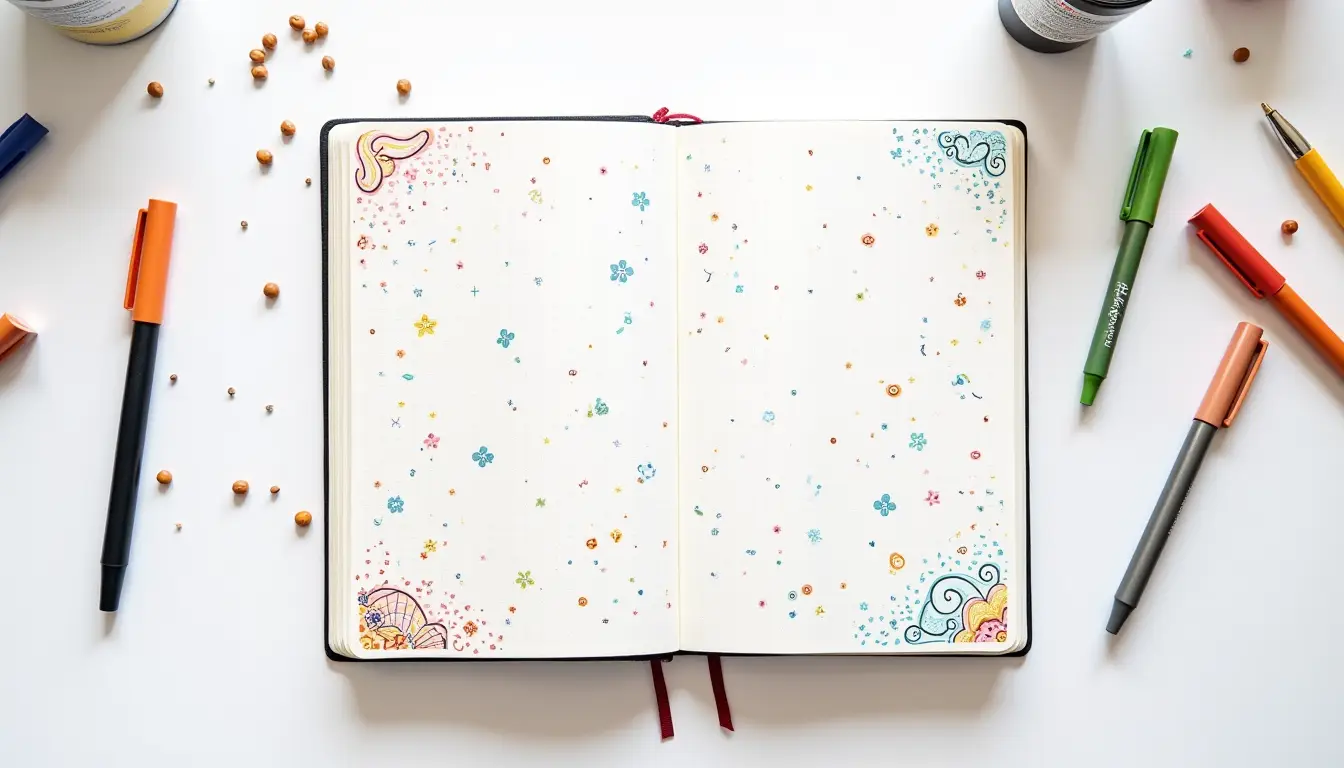
Open bullet journal displaying various header styles from minimalist to decorative with essential tools

Contents

Maybe you’ve opened your journal, ready to start a new month or section, only to freeze at the blank page because you’re not sure how to make it look “right.” Bullet journal headers evolved from Ryder Carroll’s minimalist system into expressive tools that help thousands avoid abandoning their journaling practice due to perfectionism anxiety. They are not elaborate artwork requiring years of practice—they are accessible visual markers that help you notice patterns in your writing without judgment. This article reveals header designs that require no artistic expertise, practical techniques for creating visual organization, and how to avoid common mistakes that trigger insecurity.

Bullet journal headers work because they externalize organization, creating visual landmarks that help you locate specific entries and observe patterns across time. When you flip back through pages, distinct styling tells you immediately whether you’re looking at a mood log, gratitude list, or daily reflection. That visual separation allows you to notice what tends to come up in different contexts without analyzing every word. The benefit accumulates over weeks and months as these markers reveal patterns you couldn’t see day to day. The sections that follow will show you exactly how to create these organizational tools using techniques that work even if you’ve never considered yourself artistic, and how to build a header practice that supports your journaling rather than delaying it.

Key Takeaways

  • Block letters with multi-color fills create bold headers without calligraphy skills, as demonstrated by Archer & Olive tutorials that show beginners how to paint each letter with different colors
  • Visual contrast through font variation supports pattern recognition across journal sections, with Bullet Planner Ideas recommending bold all-caps headers against cursive body text
  • Banners and ribbons provide easy framing methods that allow personalization without frustration, addressing how elaborate designs can trigger insecurity according to Sheena of the Journal
  • Pencil-first methods honor creative process by allowing revision before ink commitment, establishing adjustment as part of practice rather than evidence of failure
  • Dot grid notebooks guide spacing while maintaining flexibility for freeform reflection, providing structure without the rigid feel of lined paper

Essential Bullet Journal Headers Techniques for Beginners

You might be surprised how simple block letters can look once you add color. They form the foundation of accessible header design because you’re working with basic shapes rather than flowing script. Draw simple letter outlines in pencil, then fill each with a different color from your available markers. The technique requires no specialized skills. As Neus from Archer & Olive describes the approach: “I’m using block letters combining the three colors: pink, teal and orange yellow, painting each letter with a different one to make the word more colorful.” This multi-color blocking demonstrates how variety emerges from simple fill variations rather than complex drawing.

Banners and ribbons provide framing that takes under a minute to complete. Draw a horizontal rectangle for your text, then add triangular flags on each end. Write your header inside this contained shape. For curved variations, lightly sketch a semicircle in pencil as a guide for your bottom edge, then draw your banner following that curve. The slight arch creates visual interest while remaining easy to execute, even when your hand feels unsteady or you’re journaling in less-than-ideal conditions.

Ombre blending introduces depth through a forgiving technique where variation becomes a feature rather than a flaw. Choose a base shade for your letters and add darker tones at the bottom, then blend with the lighter color for a gradient effect. The blending process naturally creates differences each time, meaning no two implementations look identical. This removes the pressure of replicating an exact result. When you can’t get it “wrong” because every outcome is unique, the technique becomes accessible rather than intimidating.

Faux calligraphy adds elegance without requiring specialized pens or years of practice. Write your header text in standard handwriting, then go back and thicken the downstrokes on each letter. This creates the appearance of script lettering using whatever pen you have available. The technique works because you’re adding weight to existing letters rather than trying to create flowing strokes in real time.

Starting bullet journal headers with pencil outlines before committing to ink allows adjustment and reduces fear of permanent mistakes. According to Archer & Olive tutorials, this pencil-first approach establishes revision as part of creative process rather than evidence of failure. You can shift letter placement, adjust sizing, or completely redraw elements until they feel right. Only then do you trace with ink and erase the pencil marks. This honors your process rather than demanding perfect execution on first attempt.

Hands creating bullet journal headers with black pen, showing minimalist geometric and floral banner designs in progress

Why Dot Grid Notebooks Support Header Creation

Dot grids guide letter sizing and spacing without the rigid feel of lined paper. The dots provide alignment points for uniform headers while maintaining flexibility for freeform reflection. You can count dots between letters to maintain consistent spacing—even one or two dot-widths create breathing room that prevents cramped text. This balance between guidance and openness mirrors the journaling philosophy of structure without constraint. The dots are present when you need reference points but fade into the background when you’re writing freely, allowing headers to feel integrated with your reflective work rather than sitting in separate, formal title boxes.

How Visual Design Supports Journaling Practice

Headers serve as visual anchors that help you notice patterns across entries without judgment. When you create distinct styling for different section types, daily logs look immediately different from weekly reflections, which look different from mood trackers or gratitude lists. These visual landmarks help you quickly locate specific content types when flipping back through your journal. More significantly, they allow you to observe what tends to arise in each context over time.

Changing fonts between headers and body text creates visual hierarchy that makes sections immediately distinguishable. According to Bullet Planner Ideas, using bold all-caps styling for titles against cursive body text establishes clear separation. This structural choice helps you notice what tends to come up across different sections, enabling the compassionate observation that supports self-understanding. When mood logs consistently use the same header style across weeks, patterns in emotional states become more apparent than they would be if every page looked identical.

The emotional dimension of header design directly influences whether someone continues their practice. Sheena of the Journal notes that elaborate designs “can lead to insecurity for beginners,” observing that header complexity affects sustainability for people building new habits. When decorating becomes a barrier rather than an invitation, many people stop showing up to their pages altogether. This isn’t about laziness or lack of commitment—it’s about how comparison to polished examples triggers the feeling that your attempts don’t count as legitimate journaling unless they meet certain aesthetic standards.

Thematic monthly bullet journal headers incorporating seasonal elements create anticipation and connection to natural cycles. Summer doodles for July and August, autumn leaves for September and October—these variations give you something to look forward to while preventing the repetitive feeling that sometimes leads to abandonment. According to YouTube tutorials demonstrating seasonal approaches, this practice helps sustain journaling through variety. The approach also connects personal reflection to environmental context, potentially revealing how mood patterns relate to seasonal changes you might not otherwise notice.

Multi-color outlines create contrast that helps pages stand out when flipping through your journal. This makes it easier to locate specific entries or notice patterns in how you’ve organized thoughts over weeks or months. The visual processing involved in scanning for these color cues happens faster than reading text, allowing you to navigate your journal efficiently when you’re looking for something particular or simply reviewing what’s been coming up for you lately.

Current trends move toward what might be called accessible imperfection. Minimalist black-and-white headers with small color accents represent this shift, offering definition without the supply requirements or execution pressure of fully illustrated pages. This approach acknowledges that many people journal during stolen moments rather than dedicated creative sessions, and headers need to serve that reality. The practice exists to support your reflection, not to create portfolio pieces for social media.

Avoiding the Perfectionism Trap

The reflection and emotional processing you write builds self-understanding. Headers simply organize that content. If decorating feels like a barrier to getting words on the page, use plain text titles instead. You can always add visual elements later if you want them, but the story you’re telling yourself through writing matters more than ornamental framing. Many people have journals that sit untouched because they’re waiting for the right time to create the perfect header, when what they actually need is to start noticing what’s present right now. That noticing doesn’t require decoration—it requires showing up.

Practical Applications and Common Mistakes

Start with block letters if you’re new to decorative bullet journal headers. Draw simple letter outlines in pencil on your dot grid page, counting dots to keep letters uniform height. Fill each outline with a different color from your available markers. After filling, trace the outlines with a darker shade or black pen to create definition. Erase pencil marks once ink dries. This technique creates colorful, bold headers in minutes and requires no calligraphy skills.

Banner technique works when you want definition without elaborate design. Draw a horizontal rectangle for your text, then add triangular flags on each end. Write your header text inside, keeping letters simple. This contained shape naturally draws attention and can be completed in under thirty seconds. The framing provides structure without demanding artistic execution, making it accessible even when you’re tired or your hands feel unsteady.

3D effects work well once basic techniques feel comfortable. After drawing block letters, add a diagonal fill extending from each letter’s bottom-right edge. This creates a shadow effect that makes headers more dimensional without requiring drawing skills beyond letter outlines. The depth comes from a simple geometric addition rather than complex shading or perspective work.

Balloon-style letters add playful energy appropriate for creative collections or lighter content. After creating your basic letters, add small strings extending downward from each letter’s bottom. Place tiny highlight marks in the upper corners to suggest reflection. These two additions transform standard letters into floating balloons through minimal extra work.

Overcrowding letters too close together makes words cramped and difficult to read. This happens when you’re focused on fitting everything into a specific space rather than letting letters breathe. Count dots between letters to maintain consistent spacing. Even one or two dot-widths create breathing room that improves legibility. The white space around letters matters as much as the letters themselves for creating headers that feel open rather than cluttered.

Committing to pen too quickly leads to frustration when letters land off-center or sized unevenly. You see the mistake but can’t adjust it, which triggers the feeling that you’ve ruined the page. Use pencil for initial layouts instead. Adjust letter placement and sizing as needed. Finalize with ink only once placement feels right. This honors your process rather than treating adjustment as failure. Revision is part of creating, not evidence that you’re doing it wrong.

For mood tracking or sections where you’re noticing emotional patterns, try using consistent header styling across multiple pages. This repetition creates visual continuity that helps you see entries as connected data points rather than isolated moments. When you can quickly flip through a month of mood logs with identical headers, patterns in what comes up for you become more apparent. You’re using visual design to support the observation that therapeutic journaling encourages.

Your header experimentation reveals information about your practice. If you notice resistance to decorating, that itself tells a story worth exploring about what feels unsafe about making marks on the page.


Evolution and Current Trends in Header Design

Bullet journaling originated with Ryder Carroll’s minimalist system in the 2010s, where headers were plain text titles serving purely organizational functions. The original framework was intentionally bare, using rapid logging with simple bullets to categorize tasks, events, and notes. Headers marked collections and monthly logs without decorative elements, focusing entirely on function over form.

As the practice spread through online communities, users began customizing the structure with personal creative touches. This evolution reflected a shift from viewing bullet journals as efficiency tools toward seeing them as spaces for self-expression. The decorative movement gained momentum when users shared photos of their spreads on visual platforms, where elaborate headers and illustrations garnered engagement. What started as minimalist task-tracking transformed into a practice where bullet journal headers became opportunities for experimentation with lettering, color, and design.

Current shifts emphasize what practitioners call “easy, imperfect styles.” This movement responds to feedback from beginners who felt excluded from journaling communities unless they possessed both artistic skill and extensive marker collections. Tutorial creators now commonly preface demonstrations with permission-giving language, normalizing simple headers as equally valid choices rather than temporary compromises until skills improve. The messaging acknowledges that elaborate designs can trigger insecurity rather than inspiration for people building new habits.

Ombre and gradient effects continue growing in popularity because the blending process naturally creates variation. No two implementations look identical, which reduces perfectionism since there’s no single correct result to achieve. Tutorials increasingly present ombre as a quick addition rather than an elaborate project, showing how brief color layering adds depth in under a minute. This accessibility makes the technique appealing for people who want visual interest without significant time investment.

Video tutorials demonstrating 25 to 50 variations in single sessions reflect an emerging understanding that sustained practice requires options. According to YouTube compilations showing multiple approaches, these resources encourage experimenting across techniques to discover what feels natural. Instead of mastering one perfect header style, you try different methods until you find approaches that match your hand coordination, aesthetic preferences, and available supplies. This diversity-focused teaching acknowledges that what works for one person may not suit another.

Why Bullet Journal Headers Matter

Bullet journal headers matter because they create organizational structure that supports pattern recognition over time. When you can quickly identify different section types through visual styling, you notice what tends to come up in various contexts. That noticing is where self-understanding begins. Headers also reduce the overwhelm of facing blank pages by providing clear starting points. The practice of creating them can become a gentle entry into journaling sessions, a brief creative moment that transitions you from external demands to internal reflection. For people who struggle with perfectionism, learning to create imperfect headers builds permission to show up as you are rather than waiting until you feel ready.

Conclusion

Bullet journal headers transform from intimidating decorative elements into accessible tools when you focus on simple techniques like block letters, banners, and ombre blending. The reflection and pattern recognition you develop through journaling matters more than achieving aesthetic standards. Headers serve your practice, not social media expectations. Starting with pencil, counting dots for spacing, and allowing imperfection creates a

Frequently Asked Questions

What are bullet journal headers?

Bullet journal headers are decorative or functional page titles that organize journal sections through visual styling techniques including lettering variations, color fills, and framing elements like banners and ribbons.

How do you make bullet journal headers for beginners?

Start with block letters drawn in pencil, then fill each letter with different colored markers. Add simple banners by drawing horizontal rectangles with triangular flags on each end for easy framing without artistic skills.

What is the difference between block letters and faux calligraphy for headers?

Block letters use simple letter outlines filled with color, while faux calligraphy involves writing in standard handwriting then thickening the downstrokes to create the appearance of script lettering using any pen.

Why use dot grid notebooks for bullet journal headers?

Dot grids guide letter sizing and spacing without rigid lines, providing alignment points for uniform headers while maintaining flexibility. You can count dots between letters to maintain consistent spacing.

How does ombre blending work in bullet journal headers?

Ombre blending adds darker tones at letter bottoms then blends with lighter colors for gradient effects. The natural variation in blending removes perfectionism pressure since every outcome is unique.

What does pencil-first method mean for bullet journal headers?

Drawing headers in pencil before ink allows adjustment of letter placement and sizing without permanent mistakes. This establishes revision as part of creative process rather than evidence of failure.

Sources

Richard French's Journaling Books

The Art of Journaling

Transform your life through journaling with practical techniques for growth, creativity, and clarity.

Write Your Way

Harness the power of journaling for personal growth, creativity, and self-expression in daily life.

Self-Discovery Prompts

100 research-backed prompts to unlock self-awareness, process emotions, and discover your true self.

Mental Health Prompts

100 evidence-based prompts to transform anxiety, depression, and stress into clarity and resilience.