
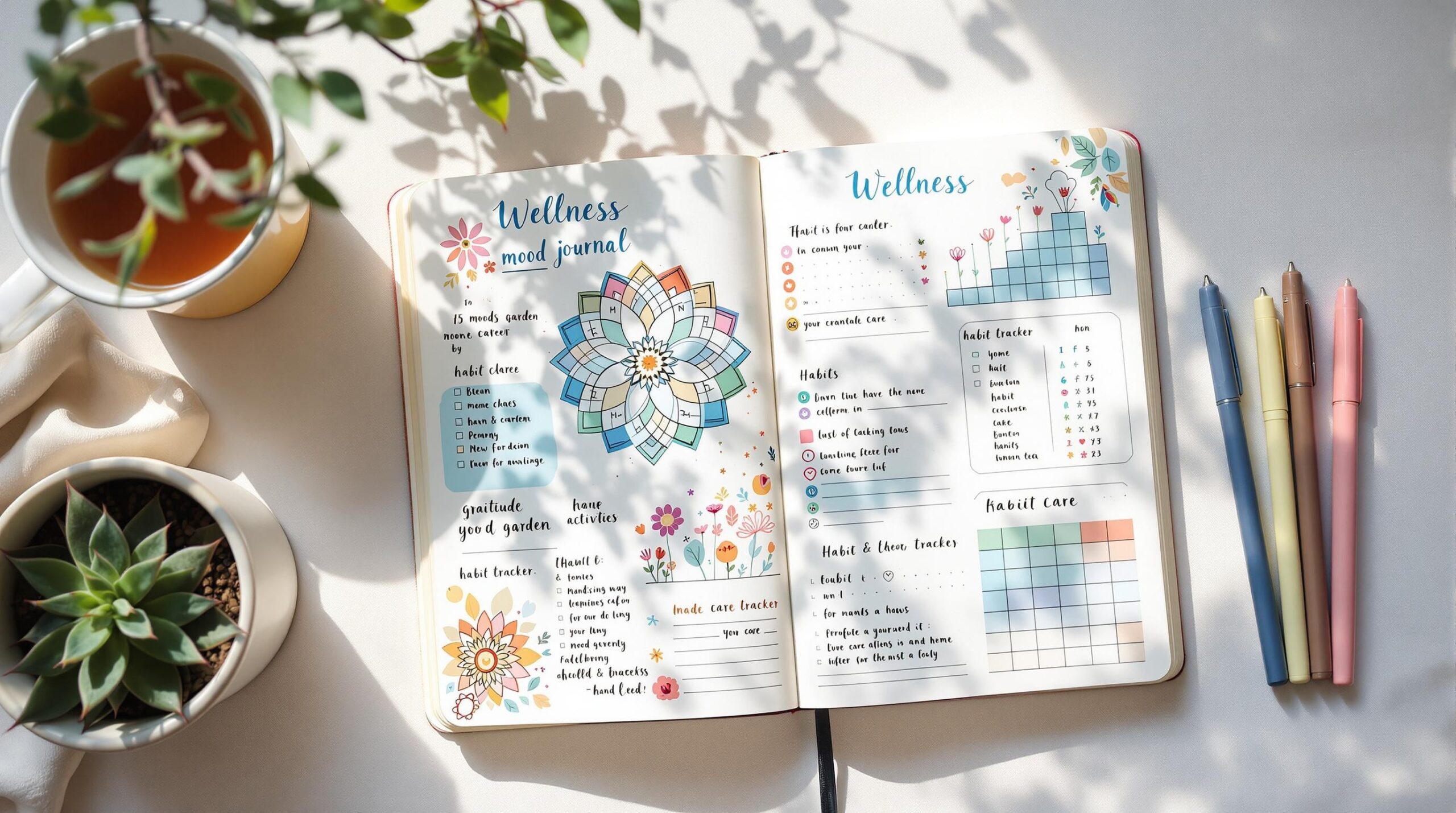
Maybe you’ve opened your journal on a difficult morning and stared at the blank page, unsure where to start. That hesitation is common, and it points to why structure helps. A randomised controlled trial of 70 adults found that 15-minute journaling sessions three times a week over 12 weeks significantly reduced anxiety and mental distress (Smyth et al., JMIR Mental Health, 2018), demonstrating that structured writing is more than aesthetic self-care. It’s evidence-based emotional support. As mental health professionals increasingly recommend mood monitoring and expressive writing, bullet journal page ideas for wellness offer customizable, accessible alternatives to clinical tools and digital apps. These analog spreads combine visual creativity with reflective prompts, helping you notice patterns between feelings, sleep, activities, and life events without the pressure of productivity metrics. This guide presents 20 research-informed bullet journal page ideas that support self-understanding, pattern recognition, and compassionate self-awareness.
Quick Answer: Mood and wellness bullet journal page ideas are structured tracking and reflection tools that help you monitor emotions, recognize patterns, and practice self-care through visual logs like mood grids, gratitude corners, sleep-emotion trackers, and self-compassion prompts.
Definition: Wellness bullet journal page ideas are structured layouts that combine mood monitoring, habit tracking, and reflective prompts to support personal self-discovery and pattern recognition.
Key Evidence: According to a 2020 study of 102 undergraduates, gratitude journaling three times weekly for four weeks led to increased positive affect and life satisfaction compared to controls, validating that simple wellness pages have measurable effects on mood.
Context: These pages are not productivity trackers designed to measure achievement. They are observation tools that reveal connections between emotions and life circumstances over time.
Mood and wellness tracking works through three mechanisms: it externalizes internal experience, creates observable patterns across time, and allows you to see connections between emotions and life circumstances. When you write down how you feel alongside what happened that day, how you slept, or who you spent time with, scattered impressions become data you can examine. The benefit comes from accumulation, not from any single entry. The sections that follow will show you exactly how to design pages that reveal these patterns, even when emotions feel overwhelming, and how to build a sustainable practice that serves understanding rather than judgment.
Key Takeaways
- Evidence-based practice: Structured journaling reduces anxiety and supports emotional regulation through brief, consistent sessions
- Pattern recognition: Visual mood tracking helps identify connections between feelings, sleep quality, activities, and life events over weeks and months
- Flexibility matters: Bullet journal page ideas should be adapted to your needs; if a tracker feels burdensome or creates guilt, modify or discard it
- Multi-domain tracking: Combined spreads revealing relationships between mood, rest, energy, and social connection provide deeper insights than single-variable logs
- Self-compassion focus: Effective wellness pages emphasize noticing and understanding rather than judging performance or measuring success
Understanding Mood and Wellness Bullet Journal Page Ideas
Wellness bullet journal page ideas are structured layouts that combine mood monitoring, habit tracking, and reflective prompts, adapted from clinical mental health tools but designed for personal self-discovery and pattern recognition. These pages transform your notebook into a tool for emotional awareness by helping you see patterns you’d otherwise miss, connecting how you feel with how you sleep, what you do, and what happens around you.
Ryder Carroll, creator of the Bullet Journal method, emphasizes that trackers should be used intentionally and reevaluated regularly: if something you’re tracking makes you feel guilty or boxed in, it may be worth modifying or discarding. This principle distinguishes wellness tracking from productivity metrics. The goal is observation without judgment, noticing what comes up rather than measuring achievement.
Mood charting on paper helps many people understand their fluctuations and gives clinicians something concrete to work from. This demonstrates that simple analog tracking supports self-awareness even in clinical populations, validating the use of paper-based spreads for broader audiences seeking self-understanding.
Research on art therapy suggests that combining text with colors, shapes, and symbols helps externalize emotions that are hard to capture in words alone. This supports the integration of creative elements in mood spreads. The visual component isn’t just decoration; it’s a different language for expressing internal experience. When words fail, a color-coded grid or doodled icon can still capture the essence of how a day felt.
Why Analog Tracking Works Better Than Apps for Some People
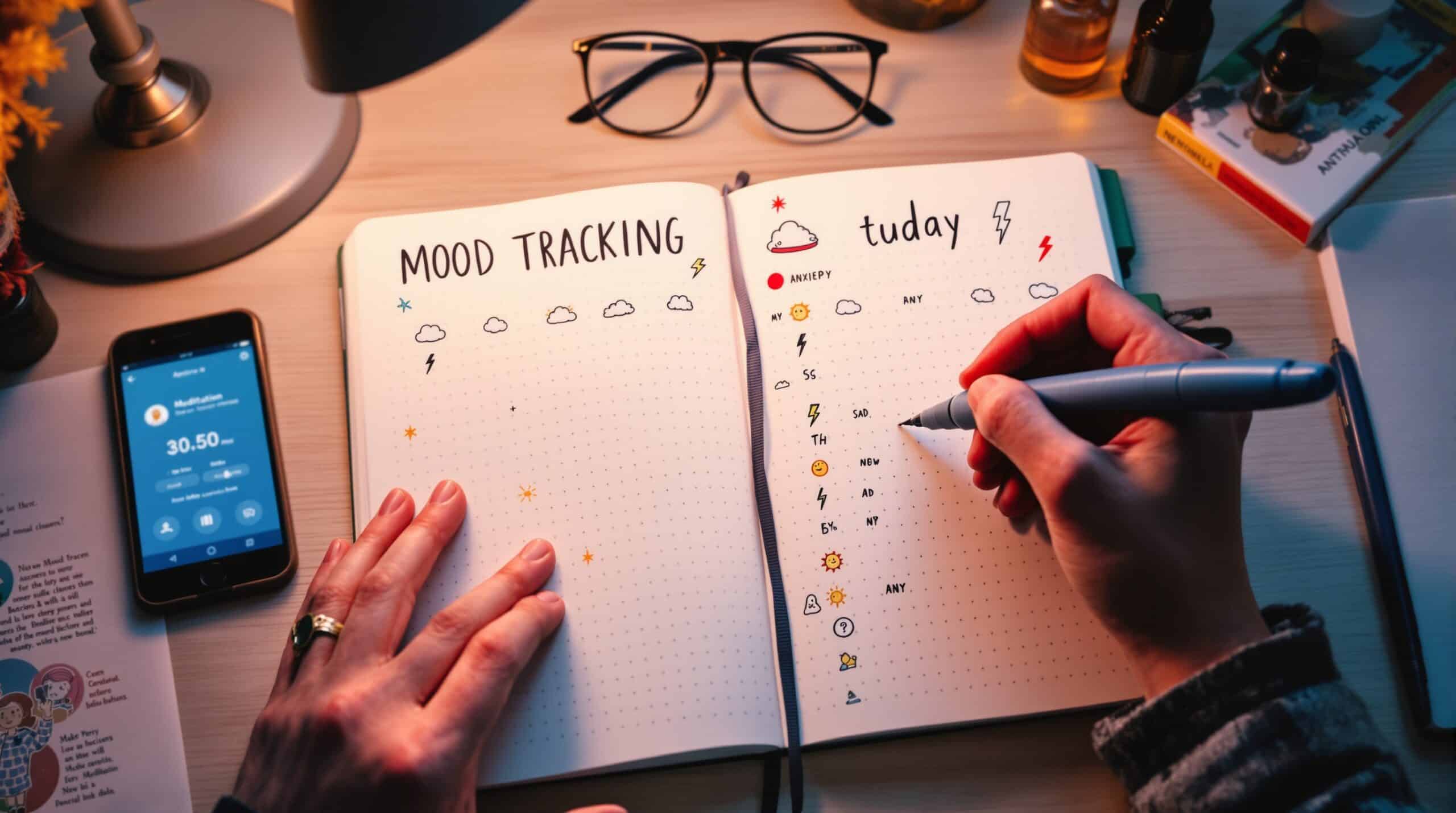
Tactile engagement and screen-free qualities reduce the sense of surveillance that many digital mood trackers create. A 2021 review of 94 mood-tracking apps found most rely on simple self-report scales and few have been scientifically validated or integrate evidence-based therapeutic techniques. Bullet journals offer freedom from algorithms, notifications, and data privacy concerns while allowing unlimited customization. Creative expression through colors and doodles increases engagement and sustainability, turning what could feel like clinical documentation into a personally meaningful practice.
Essential Mood Tracking Pages That Reveal Patterns
You might have noticed that poor sleep leaves you irritable the next day, but seeing that pattern across weeks makes the connection undeniable. A large longitudinal study of 4,494 young adults found that each hour of sleep deviation from an individual’s typical pattern was associated with higher next-day negative mood and lower positive mood. This research underscores the value of combined sleep-and-mood tracker pages. When you track both simultaneously, you begin to see how rest patterns influence emotional experience in ways that aren’t obvious day to day.
The most effective mood trackers combine emotional data with sleep, energy, or physical sensations to reveal connections you can’t see in the moment, showing, for example, that low mood consistently clusters with poor rest and reduced social contact. These multi-domain spreads work because emotions don’t exist in isolation. They’re influenced by how your body feels, how much rest you’re getting, and what’s happening in your life.
A year in pixels mood grid assigns colors to general moods (calm, anxious, sad, joyful, neutral) and fills one small square per day. Over months, patterns around days of week, times of month, or seasons become visible. You might notice that Mondays tend blue, that mid-cycle weeks feel lighter, or that winter months cluster toward gray. The grid doesn’t explain why, but it shows you where to look.
A mood and sleep combo tracker logs predominant mood and sleep hours or quality side by side daily. This helps you notice whether poor rest precedes low mood or follows it, a distinction that matters when deciding whether to prioritize sleep hygiene or address what’s keeping you awake.
An emotion wheel or word cloud writes specific emotion words (overwhelmed, peaceful, frustrated, hopeful) rather than numbers. Over time, your emotional vocabulary expands and recurring feelings become clear. You might discover you name “anxious” frequently but rarely write “disappointed” or “excited,” revealing which emotional territories you inhabit most.
A body sensations check-in tracks physical cues like tension, fatigue, restlessness, or calm. Many of us notice emotional patterns show up in the body first: the tightness in your chest before you name anxiety, the heaviness in your limbs before you recognize sadness. Tracking sensations can be a gentler entry point than naming feelings directly.
An energy level line graph rates daily energy (not productivity) on a 1-5 scale and connects the dots to reveal rhythms related to rest, stress, or demands. You may see weekly patterns (energy dips mid-week) or monthly ones (certain phases feel consistently lower) that help you plan around your natural fluctuations.
A weather and mood comparison tracks the weather alongside your mood. Some people discover seasonal or weather-related patterns; others find no link. Either way, you learn something about what influences you and what doesn’t.
A mandala or coloring-based mood log divides a mandala into segments (one per day or week) and colors each according to mood. Research shows that coloring intricate designs reduces anxiety in the short term while creating a visual record. The finished page becomes both art and data.
A 2018 systematic review of self-monitoring in mental health found that while many participants reported feeling more in control and aware of patterns, a subset reported increased distress or feeling “watched.” This reinforces that tracking should be flexible and optional. If a page starts feeling like surveillance rather than support, that’s information worth noticing.
Self-Compassion and Reflection Bullet Journal Page Ideas
Maybe you’ve caught yourself mentally replaying a mistake from three days ago, narrating it with harsh words you’d never speak to a friend. That gap between how we treat ourselves and how we treat others is where self-compassion pages do their work. Kristin Neff, PhD, at the University of Texas at Austin, frames self-compassion as treating oneself with kindness, recognition of common humanity, and mindfulness rather than harsh self-judgment. Higher self-compassion is consistently associated with lower depression, anxiety and stress, and with greater life satisfaction. This establishes that pages designed around self-compassion aren’t just feel-good exercises; they’re interventions with measurable effects.
Self-compassion bullet journal pages transform self-monitoring from performance measurement into curiosity, asking “what would I tell a friend in this situation?” instead of rating whether you’re doing well enough. This shift changes the entire experience of tracking. Instead of collecting evidence of failure, you’re gathering information about what you need.
A gratitude corner reserves small space on your weekly spread for one or two specific things you appreciated each day. Research shows noticing small positives (depth over quantity) increases life satisfaction. The practice isn’t about forcing positivity but about training attention toward what’s working alongside what’s difficult.
A “what helped today” log writes one thing each evening that made the day slightly easier: a walk, a text from a friend, ten minutes of quiet. This builds awareness of your personal coping strategies. Over time, you’ll see which supports you reach for most and which ones consistently help.
A self-compassion prompt page answers once weekly: “If I spoke to myself the way I’d speak to a close friend, what would I say about this week?” or “What am I telling myself about this situation? What else might be true?” These prompts create distance between you and your self-criticism, making it easier to see where you’re being harder on yourself than necessary.
A “the story I’m telling myself” page writes the narrative you’re constructing when strong emotion arises (“I’m a failure,” “No one cares,” “I can’t handle this”) then asks what other interpretations might exist without forcing positivity. This fosters cognitive flexibility, the ability to hold multiple perspectives simultaneously rather than collapsing into one harsh story.
A permission slip tracker writes one thing each day or week you gave yourself permission to do or not do: rest instead of cleaning, say no to a request, eat what you wanted. This builds awareness of self-compassion in action, making visible the small choices that either honor or override your needs.
A “what I’m noticing” weekly reflection writes a few sentences at week’s end about patterns, surprises, or questions. This meta-reflection deepens self-awareness beyond daily data points. The patterns you notice about your patterns matter as much as the original observations.
A micro-joy doodle page draws tiny symbols representing small moments of okayness each day: a coffee cup, a tree, a pet. This practice invites gentle noticing without words, which can feel less demanding when language fails or emotions feel too big to name.
As awareness increases that intense emotional writing can destabilize some people, particularly those with trauma histories, gentler prompts like “one thing that felt even slightly okay today” or “a moment I felt safe” provide safer entry points. Not everyone benefits from deep emotional excavation. Sometimes the most compassionate approach is observation without analysis.
Practical Application and Sustainability
Sustainable wellness bullet journal page ideas prioritize regular reflection over aesthetic perfection. The simple tracker you maintain for months reveals more than the elaborate spread you abandon after two weeks. This matters because pattern recognition requires consistency. One week of mood data tells you almost nothing. Three months shows you something real.
A trigger and coping spread notes when something difficult happens: the situation, the feeling that arose, what you did in response, and whether it helped. This mirrors cognitive-behavioral thought records without self-judgment. Over time, you’ll see which coping strategies consistently work for you and which ones you reach for that don’t actually help.
A social connection tracker marks days with meaningful contact: a call, a walk together, a meal with someone you care about. Many people notice isolation correlates with lower mood, and seeing this visually guides decisions about reaching out. The pattern might show that you feel better on days when you connect, even when connecting feels hard to initiate.
A movement that felt good log notes types of movement that left you feeling better (stretching, dancing, a slow walk) rather than steps or workouts. This reframes physical activity as self-care, not achievement. You’re tracking what serves your body, not what you accomplished.
An anxiety spiral or storm tracker draws a spiral or storm cloud when you feel anxious and jots a few words about the worry or trigger. Recurring themes or situations become visible over weeks. You might notice that certain types of uncertainty consistently spark anxiety, or that worry intensifies at specific times of day or month.
A therapy or support themes page jots key themes, insights, or homework after sessions if you’re in therapy or support groups. Revisiting these between appointments deepens the work and tracks your evolving understanding over time. What felt true three months ago might look different now, and that shift itself is information.
According to the UK’s National Institute for Health and Care Excellence, mood monitoring should be part of bipolar self-management plans specifically to identify early warning signs and patterns over time, emphasizing awareness over performance. This clinical validation extends to personal wellness tracking. The goal is understanding, not adherence to a perfect record.
Common mistakes include tracking too many variables at once, which leads to abandonment. Start with one or two elements that genuinely matter to you. Another mistake is treating missed days as failure when gaps are actually information about your capacity and needs in that moment. If you avoid your journal for a week, that avoidance itself tells you something worth noticing.
Using scales that don’t resonate creates friction. If a 1-10 mood scale feels meaningless, try colors, words, weather metaphors, or doodles instead. The right tool is the one you’ll actually use, not the one that looks most systematic.
Best practices include revisiting your trackers monthly and asking: “Is this helping me understand something, or does it feel like a chore?” Adjust or abandon accordingly. Pair tracking with reflection, since data alone isn’t insight. Build in space to notice what the patterns reveal. Design for sustainability, not aesthetics. A simple grid you’ll use beats an elaborate spread you’ll dread opening.
Adapt frequency to your rhythm. Some patterns emerge from consistent daily tracking; others become clear through periodic weekly reflection. There’s no single right cadence. The right frequency is the one you can maintain without it becoming a burden.
Why Mood and Wellness Bullet Journal Page Ideas Matter
Mood and wellness bullet journal page ideas matter because a feeling logged once is a data point and a feeling logged for a month is a pattern. A simple tracker shows which days, habits and situations travel with your low moods and which with your steady ones, and the reflection pages beside it turn that data into something you can act on. The layouts in this post are only as valuable as the noticing they make possible.
Conclusion
Choose the mood page you will actually fill in, whether that is a colour grid, a weather metaphor or a line of words, and pair it with a reflection page so the tracking means something. Revisit the spreads monthly, keep what helps you understand yourself, and drop what feels like a chore. Sustainability beats aesthetics every time.
Related reading
- Benefits of Journaling
- Bullet Journal Doodles and Headers: Simple Drawing That Supports Your Practice
- How to Create a Habit Tracker Bullet Journal: 7 Simple Steps for Daily Success
- 10 Creative Sleep Tracker Layouts for Your Bullet Journal
Sources
- Bullet Journal – Official guidance on intentional habit and mood tracking, emphasizing flexibility and self-awareness over rigid adherence
- Archer & Olive – Practical mood tracker layouts and creative techniques for bullet journal wellness spreads
- Tombow Europe – Visual mood tracking methods and artistic approaches to wellness journaling
- Yop & Tom – Step-by-step mood tracker designs focused on self-care and mental health awareness
- Zen Art Supplies – Multi-domain mood tracker examples linking emotions with life areas like sleep, relationships, and self-care
- Little Coffee Fox – Year-long and daily mood tracking templates with emphasis on pattern recognition over time
- 101 Planners – Collection of mood tracker styles and applications for different journaling goals and preferences