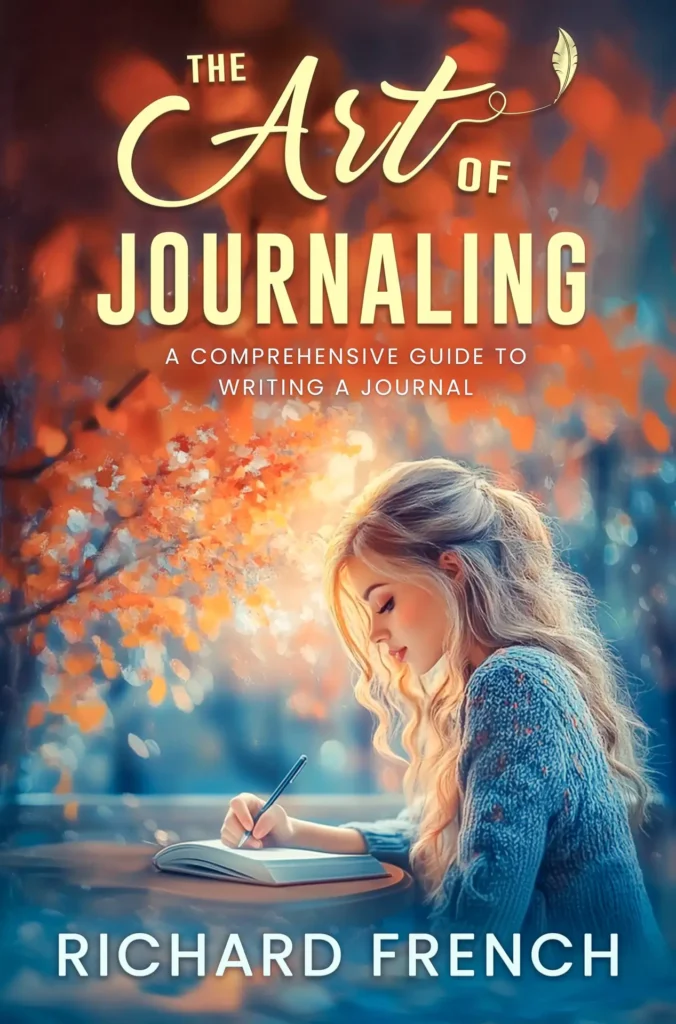

Journaling is the regular practice of writing down what happened to you, how you felt about it, and what you think about that feeling, so that you can see patterns that are invisible from inside a single day. A diary records events. A journal asks what one of them meant. In the introduction to The Art of Journaling I put it this way: journaling is more than simply recording daily events; it is an intimate conversation with yourself.
Quick Answer: Journaling is the regular practice of putting thoughts, feelings and experiences into written words so you can understand them, and so patterns invisible in the moment become visible over time. Its goal is to see what is actually there.
Definition: Journaling is written reflection on your own experience. A diary logs events without asking what they meant; a journal adds the feeling and the thought about the feeling.
Key Evidence: In controlled expressive-writing studies since Pennebaker and Beall's first experiment in 1986, writing about difficult experiences for 15 to 20 minutes on three to five occasions has been linked to better immune measures and lower distress (Baikie and Wilhelm, 2005).
Context: Discomfort in early entries is normal. In one study reported by the Greater Good Science Center, only 61 percent of participants were comfortable writing about their feelings, and they still benefited.
Key Takeaways
- Apply the stranger test: if a reader would know what you did but not what you thought, add one sentence beginning "I think that..."
- Every useful entry has three parts: the event, the feeling, the thought about the feeling.
- Write feelings and thoughts together; the feelings-only group in Ullrich and Lutgendorf 2002 did worse over a month.
- First entry: five minutes, three lines, stop when the timer goes.
Journal or diary?
The U.S. Department of Veterans Affairs draws the line in its Whole Health guide to therapeutic journaling: diary writing records the details of daily events; journaling works through the reactions attached to them. Both illustrative entries below describe the same day.
| Diary entry (logs) | Journal entry (asks) |
|---|---|
| Tuesday. Dentist at 9. Budget meeting ran long, Priya presented the new numbers. Picked up the dry cleaning. Pasta for dinner. Bed by 11. | Tuesday. The budget meeting ran long and I said almost nothing while Priya presented numbers I had helped build. I felt small, then irritated with myself for feeling small. I think the irritation is the real story: I keep waiting to be invited to speak. |
The decision rule: if a stranger could read your entry and know what you did but not what you thought about it, it is a diary. Add one sentence beginning "I think that..." and it is a journal.
What one entry looks like
An entry does not need to be long. This illustrative one is about eighty words; the bracketed notes mark its three parts.
Thursday, 9:40 pm. Mum called and asked, again, whether I had booked the flights for Christmas. [the event] I was short with her and hung up quicker than I needed to. Afterwards I felt guilty, and under the guilt, tired. [the feeling] I think the tiredness comes from being the one who organises everything, every year, without being asked whether I want to. [the thought about the feeling] Not sure what to do with that yet.
Event, feeling, thought about the feeling. The last part separates a journal from a diary, and the research says it matters most.
What the research supports
Joshua Smyth, Penn State professor and co-author with James Pennebaker of Opening Up by Writing It Down, puts it this way for the Greater Good Science Center: "Journaling is a tool to put our experiences, thoughts, beliefs, and desires into language, and in doing so it helps us understand and grow and make sense of them."
The research began with Pennebaker and Beall's 1986 experiment: college students wrote for 15 minutes on four consecutive days about the most upsetting experiences of their lives. Baikie and Wilhelm's 2005 review in Advances in Psychiatric Treatment summarises what followed: writing for 15 to 20 minutes on three to five occasions produced better immune measures (Petrie and colleagues, 1995: a stronger antibody response to hepatitis B vaccination in students who wrote about trauma), fewer sick days at work (Francis and Pennebaker, 1992) and better working memory (Klein and Boals, 2001).
One finding is behind the entry above. In Ullrich and Lutgendorf's 2002 study, also described by Greater Good, students who wrote about both feelings and thoughts, ten minutes twice a week for a month, reported more growth, while those told to write about feelings only expressed more negative emotion over time and got sick more often. Feelings plus thoughts.
The limits: Sohal and colleagues' 2022 meta-analysis in Family Medicine and Community Health pooled 20 randomised trials and found a small to moderate benefit for anxiety, depression and PTSD symptoms, with too much heterogeneity for firm conclusions about effect size. The evidence is modest and real.
The goals people journal for
In The Art of Journaling, chapter 2, I argue that the goal decides the format:
| Goal | What you write | What you notice after a month |
|---|---|---|
| Manage stress | What happened and how it felt, before bed, without trying to fix it | Which situations reliably produce the stress response |
| Build emotional awareness | "What happened, how I felt, what I thought" for anything that stays with you | Which feelings you never write about; the gaps map what you avoid |
| Self-discovery | Prompts such as "what this reveals about what I need" and "what I keep returning to" | Two or three themes that recur under different events |
How to start
Three formats give a beginner a shape: gratitude journaling (specific things you are thankful for and why), bullet journaling (tasks, events and short notes in rapid-log form) and reflective journaling (one experience and what it meant). The full range is in the types of journaling guide, and the step-by-step version is in how to start journaling.
When the page is blank, start with one of these and let it run:
- "What am I noticing about..."
- "The story I'm telling myself is..."
- "What this reveals about what I need..."
- "Today I noticed..."
The practices that keep people writing remove friction (in The Art of Journaling, chapter 7, I call the first one habit stacking):
- Anchor the entry to something that already happens: the morning coffee.
- Keep the journal and a pen in the same visible spot.
- Start with five minutes if longer feels heavy.
- When you miss days or weeks, start again without self-criticism. Stopping and restarting is part of most people's practice.
A five-minute first entry
My own first prompt came from a teacher at school, who had us open every entry with "What I learned today..." I still think it is a great way to start visualising the day.
- Set a timer for five minutes.
- Write one line beginning "Today I noticed..."
- Write one line on what you felt about it.
- Write one line on what you think about that feeling.
- Stop when the timer goes, even mid-sentence.
That is a complete entry.
When journaling does not work
Emotions written without the thought behind them become rumination; that is the Ullrich and Lutgendorf finding. Three patterns cause most of the trouble, each with a one-line fix.
- Venting-only entries. The same complaint, night after night. Fix: end every entry with one sentence beginning "I think that..."
- Writing about a wound that is still open. If an entry leaves you worse for hours, the subject is too raw for solo writing. Fix: write about something smaller and take the big one to a person.
- Grading yourself. Too short, too dull, too self-pitying. Fix: the rule in The Art of Journaling, chapter 7, is that the journal is for your eyes alone; a page about lunch and tiredness still counts.
Why Journaling Matters
A feeling that stays unnamed stays unexamined, and the story you built around it in the moment becomes the version you remember. Writing the event, the feeling and the thought puts a small distance between what happened and how you read it. Thirty such entries show what no single day can: which situations you misread, which feelings you avoid, which thought keeps arriving. That is the return on five minutes a day with a pen.
Related reading
- How to start journaling
- Types of journaling: a guide to the main styles and who each one suits
- Personal journaling for beginners: what to write and how to keep going
- What is mood journaling?
Sources
- Greater Good Science Center, UC Berkeley: How Journaling Can Help You in Hard Times – Joshua Smyth quote, the 2006 study with 61 percent comfort figure, and the Ullrich and Lutgendorf 2002 feelings-plus-thoughts finding
- Baikie and Wilhelm, 2005, Advances in Psychiatric Treatment – Pennebaker and Beall 1986 design, the 15 to 20 minute protocol, and the Petrie 1995, Francis and Pennebaker 1992 and Klein and Boals 2001 outcomes
- U.S. Department of Veterans Affairs, Whole Health Library: Therapeutic Journaling – definition of therapeutic journaling and its distinction from diary writing
- Sohal et al., 2022, Family Medicine and Community Health – meta-analysis of 20 randomised trials, small to moderate benefit, limits of the evidence