
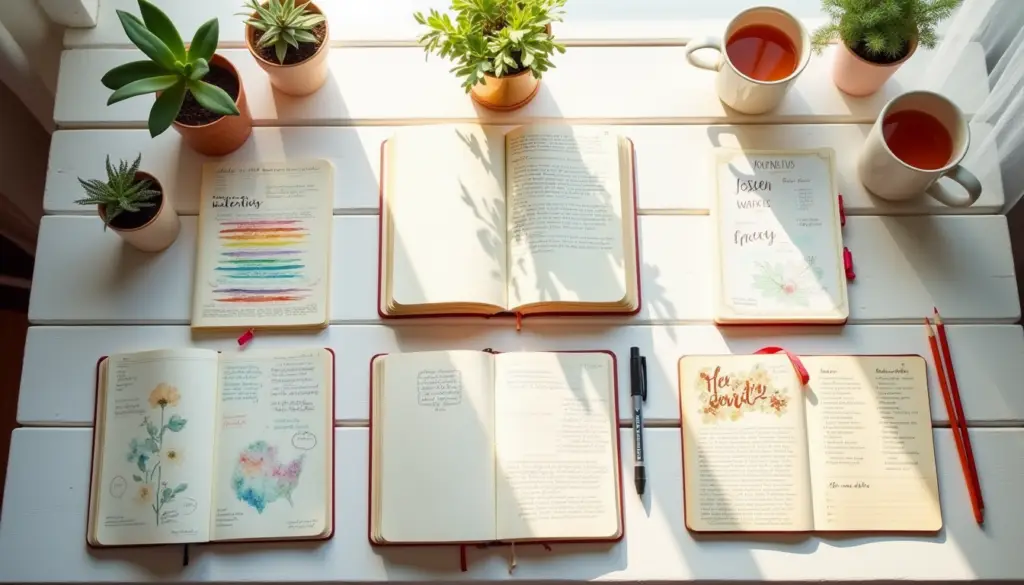
Types of Journaling: Finding Your Style
The world of journaling extends far beyond the traditional diary. Today's journaling encompasses a diverse range of approaches designed to serve different purposes and personalities. Finding the style that resonates with you is key to developing a sustainable and rewarding practice.
Reflective and Mindfulness-Based Journaling
At its core, reflective journaling invites deep consideration of experiences, emotions, and insights. Rather than simply recording events, this approach asks "why" and "how" to uncover meaningful patterns and promote personal growth.

Goal-Setting and Productivity Journaling
For those focused on achievement and organization, structured journaling approaches offer powerful tools for clarifying objectives and tracking progress.

Creative and Artistic Journaling
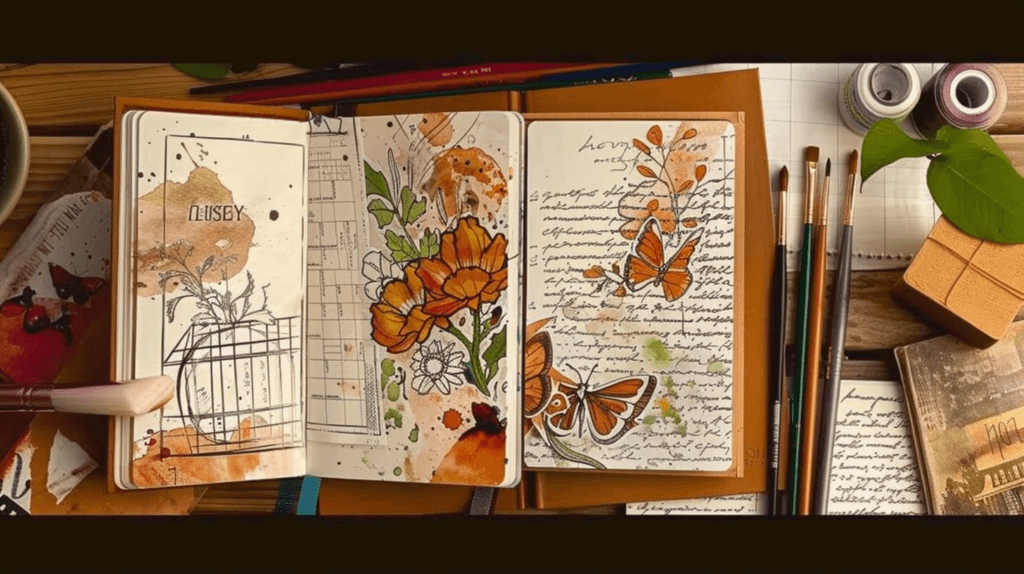
For those drawn to visual expression or seeking a creative outlet, artistic journaling offers a multi-dimensional approach to self-expression.
Structured & Organizational Journaling
For those who prefer systems, order, and methodical approaches, structured journaling offers frameworks to organize thoughts, tasks, and information.

Specialized Journaling Approaches
Some journaling styles are tailored to specific life areas or purposes, offering targeted benefits for particular needs.
Finding Your Journaling Style
With so many options available, how do you determine which journaling style best suits your needs? Consider these guidelines:
- Reflect on your purpose — Are you seeking emotional processing, creativity, organization, or something else? Different goals call for different approaches.
- Consider your natural tendencies — Are you analytical, creative, practical, or introspective? Choose styles that align with how your mind naturally works.
- Experiment freely — Try several approaches before settling on one. Many journalers find that combining elements from different styles creates the perfect personalized practice.
- Embrace evolution — Your journaling needs may change over time. Allow your practice to adapt as your life circumstances and inner landscape shift.
- Prioritize consistency over form — The "right" journaling style is ultimately the one you'll maintain regularly. Choose approaches that feel engaging and sustainable for your lifestyle.
Remember that journaling is inherently personal. While understanding established methods provides helpful structure, feel free to adapt, combine, or invent approaches that serve your unique needs. The most effective journal is one that reflects your authentic voice and supports your individual journey.
By exploring various journaling styles with an open mind, you'll discover approaches that resonate deeply with your temperament and goals, creating a practice that provides lasting value through all of life's seasons.