
100 Self-Discovery Journaling Prompts is an instruction book of prompts: 100 questions in four tiers, seven daily, thirteen weekly, fifteen monthly and sixty-five situational, each with a short framing, illustrative answers from two composite figures named Sarah and James, and follow-up questions. You answer in your own notebook or app.
It is the right book if you want a question waiting each morning. It is the wrong book if you are in crisis or want a fill-in journal with lines on the page.
Quick Answer: 100 Self-Discovery Journaling Prompts (Indie Pen Press, paperback and Kindle) contains 7 daily, 13 weekly, 15 monthly and 65 situational prompts, with a two-week start in chapter 1. Begin with one daily prompt a day for a week, add a weekly prompt in week two, and open a situational prompt when its moment arrives.
Key Evidence: The four tiers total 100 prompts. The book has twelve sections: preface, introduction, seven chapters and three appendices. ISBN 979-8991946377. It states that it is written for personal exploration and is not a clinical or therapeutic tool.
Key Takeaways
- Four tiers, four cadences: 7 daily, 13 weekly, 15 monthly, 65 situational. You never use them all at once.
- Start with week one from chapter 1: one daily prompt, about ten minutes, at the same time each day.
- Pick the prompt that pulls at you. Chapter 2 says the pull itself is information; do not run all seven daily prompts as a checklist.
- Not for crisis. If you are in acute distress or within months of a trauma, see a professional first; the mental health prompts book is the safer second step.
What the book is and who it is for
The Art of Journaling and Write Your Way teach methods and leave the choice of subject to the reader. This book supplies the question so that you can spend your ten minutes on the answer.
The premise is in chapter 1, where the composite figure James says: "I realized journaling isn't about documenting life. It's about discovering it." A diary records the day. A prompt asks what the day showed you. The book is for adults who want to understand their own values, patterns and reactions, and it says of itself that the prompts are for personal exploration and are not designed for clinical or therapeutic use.
How the 100 prompts are organised
| Tier | Count | Cadence | What the prompts ask |
|---|---|---|---|
| Daily Foundation Prompts (chapter 2) | 7 | One per morning, about ten minutes | Today's emotions, choices, growth edge, an unspoken conversation, a pattern |
| Weekly Reflection Prompts (chapter 3) | 13 | One per week, after reading back the daily entries | Patterns, trust, boundaries, values, change, joy, truth, readiness to shift |
| Monthly Deep Dives (chapter 4) | 15 | One sitting per month with the month's entries spread out | Hidden patterns, masks, old stories, the body, relationships as mirrors, outside approval |
| Situational Prompts (chapter 6) | 65 | As the moment arises | Twenty-two clusters of When prompts: praise, comparison, rest, fear of change, the inner critic, decisions, letting go |
Chapter 5 introduces the situational tier, chapter 7 covers keeping going, and three appendices follow.
Ten prompts from the book
Daily, from chapter 2:
- "What emotions shape your energy today?"
- "What pattern asks for your attention?"
- "What conversation seeks expression?"
Weekly, from chapter 3:
- "What Boundary Feels Like Self-Care?"
- "Where Did Values Guide Choice?"
- "What Wants to Shift in Your Life?"
Monthly, from chapter 4:
- "What Masks Did You Wear?"
- "How Did Your Relationships Mirror You?"
Situational, from chapter 6:
- When praise feels uncomfortable (Recognizing Worth and Value cluster)
- When your body says no (Listening to Body Wisdom cluster)
Three prompts up close
Three of the hundred, quoted from the book, with what each one is for and how to answer it.
"What growth edge invites your attention?"
A Daily Foundation Prompt, chapter 2. A growth edge is the place where, in the book's words, "life might be inviting you to stretch, learn, or expand beyond familiar patterns". Answer it by naming the thing you keep circling and leaving alone, and take the book at its word: "Remember that growth edges aren't problems to fix but doorways to deeper understanding."
"What Patterns Shaped Your Week?"
Weekly Reflection Prompt 1, chapter 3. Read the week's daily entries before you answer it, then write down the thing that repeats. In the book Sarah finds she is "just a little tired" before every social plan, and James notices his shoulders tighten before he holds a line with someone.
"What Conversation Awaits?"
Weekly Reflection Prompt 6, chapter 3. It asks for the conversation you keep rehearsing and have not had. Write who it is with, the line you keep practising, and what stops you. Sarah's is with her mother; James's is with an old friend about a friendship that has gone surface-level.
One prompt worked through
An illustrative answer to the daily prompt "What pattern asks for your attention?", by a fictional reader, might read:
Third morning this week I have said yes to a meeting I did not want.
Each time the yes came out before I had checked the calendar.
The pattern is speed. I answer before I know what I think.
What it costs me: two evenings of catch-up work and a sour mood at dinner.
What I think about that: I am treating other people's requests as more urgent than my own plans.
The book asks whether the pattern needs changing or only noticing.
For now, noticing. Tomorrow I will try "let me check" before any yes.
Reread on Sunday with the weekly prompt on boundaries.
Chapter 2 makes the same point: recognising a pattern does not oblige you to change it at once.
How to use the book
Chapter 1 gives a two-week start. Week one: one check-in a day, about ten minutes, using whichever daily prompt draws you. Week two: add one weekly prompt, and read the week's daily entries before you answer it, looking for anything that repeats. My own first prompt came from a teacher at school, who had us open every entry with "What I learned today ...", and it is still a good way to start seeing the day.
Chapter 2 tells you to follow the pull. Sarah describes trying all seven daily prompts every morning as a checklist and feeling "scattered and shallow" until she learned to listen for the one that called to her. The prompt you resist is worth a second look too.
Rereading is built in. Chapter 4 has you spread a month's entries out before choosing a monthly prompt. Chapter 6 tells you to stop trying to memorise the situational set: "the needed prompts tend to find me naturally," as James puts it. When stuck, chapter 1 says to write about being stuck, or to open with "I notice".
Who this book is not for
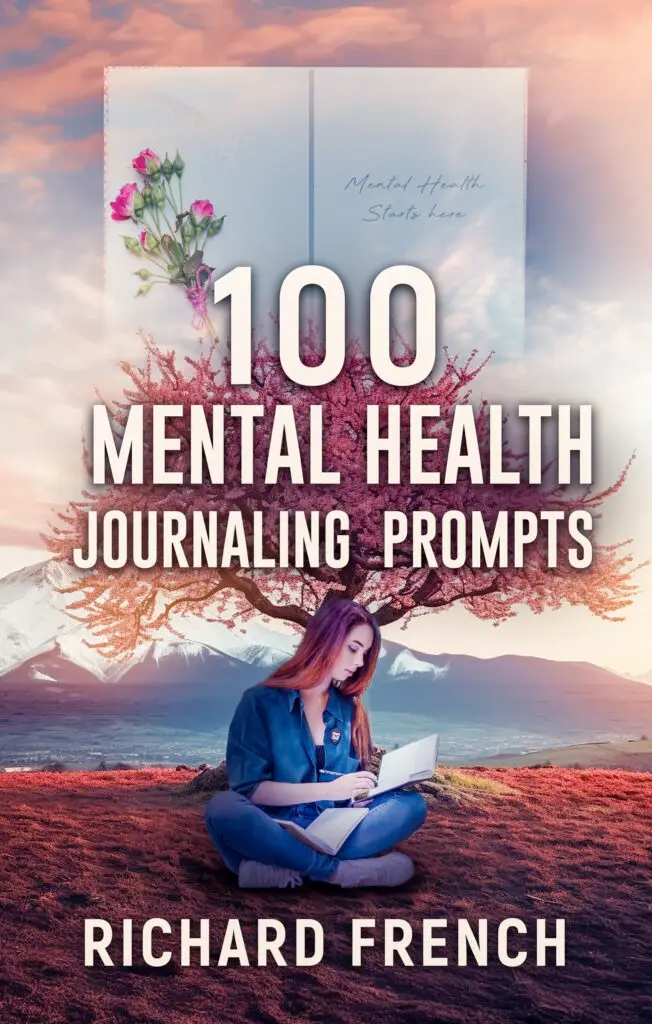
If you are in acute distress, or within the first months after a trauma, this is the wrong book for now. Talk to a professional first; when you are ready to write, 100 Mental Health Journaling Prompts has the screening page, session limits and safety notes that this book does not carry. If you want a daily gratitude list or a diary, a dated record of what happened, buy a notebook.
How it differs from the other three titles
| Title | What it is | Who it is for | Start here if |
|---|---|---|---|
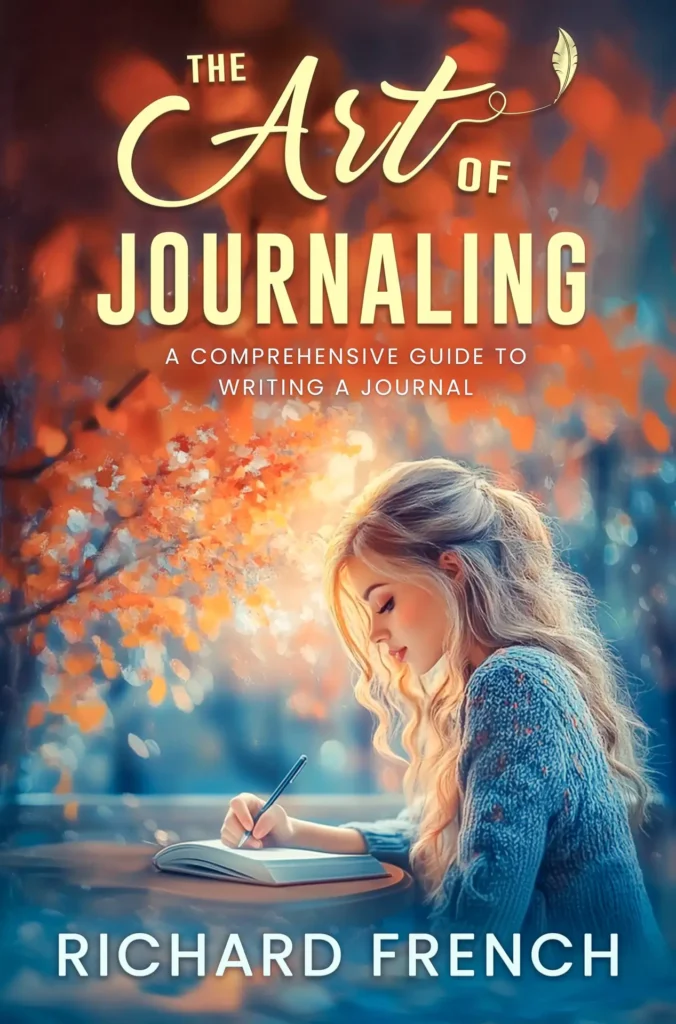
| The Art of Journaling | A beginner's guide to setting up a practice, with a broad set of methods | Readers who have never kept a journal, or tried and stopped | You want the foundations before you want questions |
| Write Your Way | A toolkit of techniques taught through stories and cited research, with a seven-day quick start | Readers who want many ways in | You want to try techniques and keep the ones that fit |
| 100 Self-Discovery Journaling Prompts | 100 prompts in four tiers for values, patterns and what you want | Readers who have a practice and run out of questions | You want a question waiting each morning |
| 100 Mental Health Journaling Prompts | 100 prompts in the same four tiers, built for anxiety, low mood and stress, with safety rules | Readers managing symptoms, or in therapy and wanting homework | Something specific is going on and you want a bounded place to write |
Why self-discovery prompts matter
A blank page asks nothing, so most people write what happened and close the notebook. A good prompt asks about something you would not have raised on your own: the mask you wore this month, the yes you gave too fast. Reading the answers back a week later is where the pattern shows.
Related reading
- 100 Mental Health Journaling Prompts: what is in the book
- Effective journaling prompts for self-reflection
- Personal journaling for beginners
- Daily journal prompt generator
- Books and resources
Sources
- 100 Self-Discovery Journaling Prompts, Indie Pen Press store – the book's listing, formats and description
- 100 Self-Discovery Journaling Prompts on Amazon – Kindle edition, length and publication details
- 100 Mental Health Journaling Prompts, Indie Pen Press store – the sister title compared in the table
- The Art of Journaling, Indie Pen Press store – the foundations title compared in the table
- Write Your Way, Indie Pen Press store – the techniques title compared in the table