Feeling overwhelmed by daily responsibilities, and lacking a system that holds them, is a common reason people reach for a bullet journal. This reflects what educators across grade levels observe in classrooms, where students increasingly seek structured methods for managing both academic and personal commitments. Through thoughtfully designed bullet journal systems, individuals are discovering practical ways to track responsibilities, establish meaningful routines, and reduce the mental load of remembering numerous tasks. This guide provides straightforward bullet journal ideas for beginners who want to establish a sustainable practice without feeling intimidated by the artistic and complex spreads often showcased online.
Quick Answer: Bullet journal ideas for beginners start with four building blocks: an index, a future log, a monthly spread and daily rapid-logging with short symbols for tasks, events and notes. Add layouts and seasonal themes only after those basics have run for a month, and keep the system simple enough to maintain on a busy day.
Definition: A bullet journal is an analogue organisation system that combines a to-do list, planner and notebook in one book using rapid logging: short bulleted entries marked with symbols.
Context: The layouts on this page are starting points; the method works because you adapt it, not because you copy a spread.
Key Takeaways
- Start with four building blocks: an index, a future log, a monthly spread and daily rapid logging.
- Keep symbols simple: a dot for tasks, a circle for events, a dash for notes is enough to begin.
- Monthly spreads before weekly ones: add detail only after a month of consistent use.
- Seasonal themes are optional: decoration follows function, never the reverse.
- Migration is the habit: moving unfinished tasks forward each month is what keeps the system honest.
What a Bullet Journal Is and Why Beginners Start One
Many people find that writing a plan by hand makes it stick better than typing it. The bullet journal method, developed by Ryder Carroll, combines the flexibility of a blank notebook with structured organization systems that adapt to individual needs and preferences.
Unlike pre-printed planners with rigid formats, bullet journals allow beginners to customize their organizational approach while maintaining a consistent framework for tracking information. The system uses simple symbols and short entries to categorize information quickly, making it accessible even for those with limited time or organizational experience. These practical bullet journal ideas for beginners create a foundation that can evolve as skills develop.
The bullet journal system works because it creates a single, centralized location for all types of information , from appointments and tasks to ideas and reflections. This comprehensive approach eliminates the scattered nature of multiple organizational tools while providing enough structure to prevent information overload. For beginners specifically, the system offers an entry point that can start extremely simple and gradually expand as comfort and needs evolve.
Essential Supplies for Bullet Journal Beginners
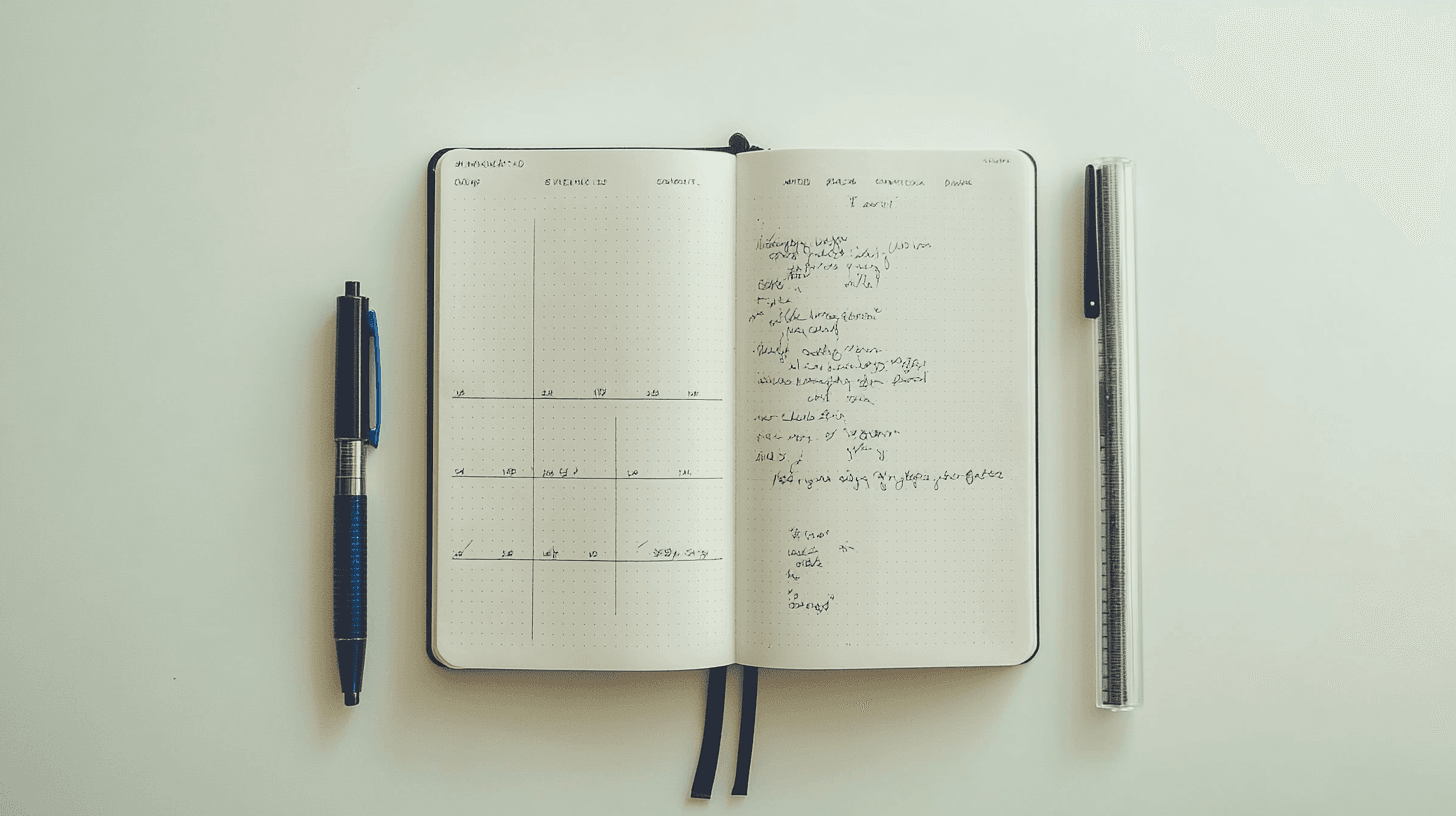
The foundational elements of an effective bullet journal require only two items:
- A notebook (preferably with dotted or grid pages for easier alignment)
- A reliable pen that doesn't bleed through pages
These simple bullet journal ideas for beginners focus on function rather than elaborate materials. This minimalist approach helps establish the habit through consistent practice before adding complexity with additional tools. As specific needs emerge and the practice becomes routine, beginners can gradually incorporate other supplies like colored pens, highlighters, or rulers based on personal preferences.
Many beginners feel intimidated by elaborate spreads showcased on social media, not realizing that these represent evolved systems rather than starting points. The bullet journal system was originally designed to be rapid and minimal, with simplicity as a core feature rather than a limitation.

Basic Bullet Journal Layouts for Beginners
These bullet journal ideas for beginners provide immediate structure while building competence in the methodology. Beginning with these four essential layouts builds a foundation for a sustainable practice:
The Index Page
The index page functions as the bullet journal's navigation system, allowing beginners to quickly locate specific information without frustration or wasted time searching through pages.
To create this foundational element:
- Reserve the first 2-3 pages of your notebook
- Title the page "Index" at the top
- Create two columns: one for content descriptions and one for page numbers
- As you add collections or monthly spreads, record their titles and corresponding page numbers
The index removes the pressure to keep similar content together, allowing beginners to use the next available page for any type of content without losing organizational integrity.
Future Log
The future log provides a bird's-eye view of commitments across multiple months, serving as both calendar and reminder system.
To establish this overview section:
- Reserve 2-4 pages following your index
- Divide each page into equal sections (typically 3 months per page)
- Label each section with the month name
- Record known future events, deadlines, and responsibilities in the appropriate months
This layout helps beginners establish connections between current actions and future obligations, creating a more integrated approach to time management without complicated systems.
Monthly Spread
The monthly spread combines calendar functionality with goal-setting opportunities, creating a centralized hub for planning each month.
For a beginner-friendly monthly layout:
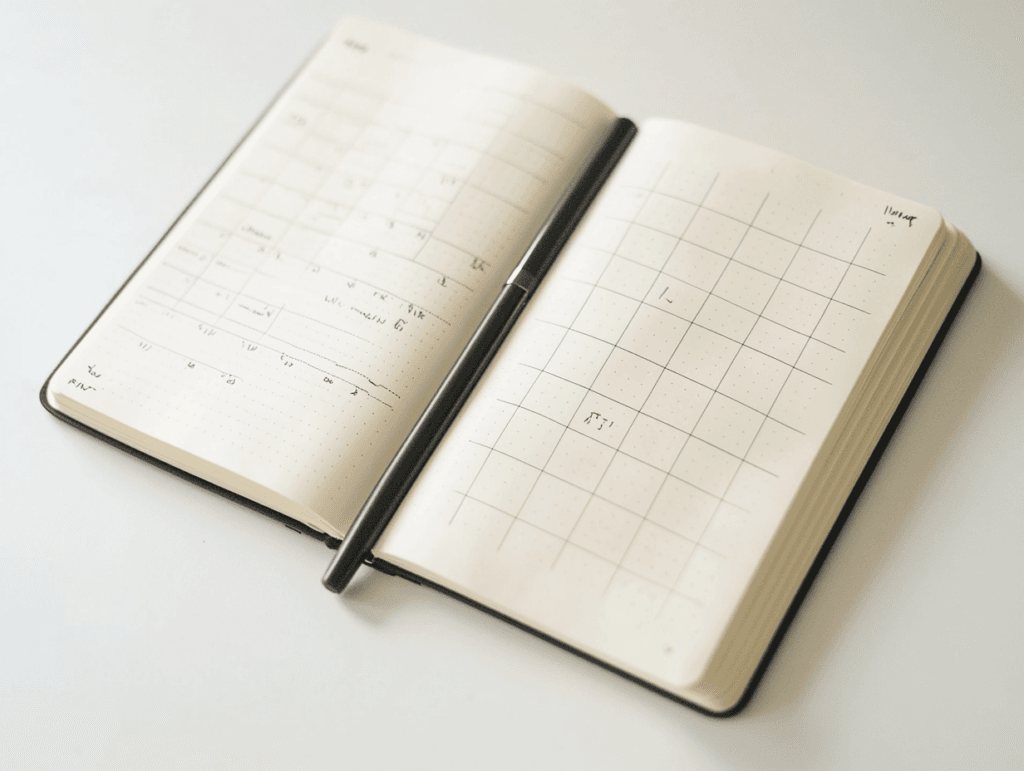
- Create a minimal calendar grid or list format for the days of the month
- Add a section for monthly goals or priorities (limiting to 3-5 key items)
- Include space for notes or tasks that don't have specific dates
- Note the page numbers of your weekly spreads inside the monthly spread, so the month points to its weeks
- Carry unfinished tasks forward to the right week rather than leaving them on the month
- Reference active collections by page number, so the monthly spread works as an index to them
This layout bridges the gap between long-term planning and daily action, providing context for daily decisions while maintaining focus on monthly priorities. The visual nature of the monthly spread helps beginners recognize patterns in their commitments and build more balanced schedules.
Daily Log
The daily log forms the core of the bullet journal system, providing space for tasks, notes, and events in a flexible format that adapts to each day's specific needs.
To implement this foundational element:
- Write the date at the top of the page
- Add entries throughout the day using bullet points
- Use simple symbols to differentiate between tasks (•), events (○), and notes (-)
- Mark tasks as completed (✓), migrated (>), or scheduled (*)
This fundamental layout adapts to each day's unique requirements while maintaining enough structure to support organization and reflection.
Choosing a theme is itself a small act of reflection. Notice which imagery pulls at you: grounded garden images or sky and weather, soft pastels or saturated brights, minimal or layered. That attraction says something about the season you are in. Then let the theme ask a question each week. Umbrella imagery becomes "what needs shelter right now?" Blooming flowers become "what is beginning?" Bare branches become "what is finished?" The picture on the page turns into a lens for noticing patterns across the month.
Using Your Theme as a Reflection Prompt
If a blank page freezes you, start by arranging instead of drawing. Collect seasonal ephemera, seed packets, a flower shop receipt, a magazine garden image, lay them on the page first, then add a few simple hand-drawn elements around them.
- Abstract watercolour washes: let the colours blend without controlling them.
- Circle templates: trace circles for planets, bubbles or moons.
- Three curved lines: that is a tulip, and nobody needs more.
- Repetitive rain lines and umbrella curves: unevenness reinforces the hand-drawn look rather than spoiling it.
Themes You Can Draw With No Drawing Skill
Seasonal themes work throughout the year, and if you want written examples to go with them, the gratitude journaling examples page has a prompt for each season.
- Spring: mint green, lavender, pale pink, sky blue. Gardening trackers, spring cleaning checklists, outdoor activity logs.
- Summer: coral, turquoise, sunny yellow, bright greens. Vacation planning, summer bucket lists, reading challenge trackers.
- Autumn: warm oranges, deep reds, golden yellows, earthy browns. Fall festival trackers, back-to-routine sections.
- Winter: cool blues, silvers, whites, deep greens, rich reds. Gift trackers, winter bucket lists, and year planning and goal-setting in January.
Seasonal Themes and Their Colour Palettes
- Traditional grid: seven columns, days in rows and columns, the familiar month at a glance. Suits busy months.
- Linear: days listed in a single vertical or horizontal line. Enough for lighter schedules.
- Circular: days arranged around a circle, a different picture of the month.
- Minimalist: dates and weekday letters only, nothing else.
Four Calendar Layouts to Choose From
The monthly spread is where most beginners want ideas, and it is also where the bullet journal monthly spread can be as plain or as decorated as your month allows. Four decisions cover it: the calendar layout, the season's palette, whether you draw anything at all, and what the theme is for.
Monthly Spread Layouts and Seasonal Themes
Simple Collections for Beginner Bullet Journalists
These specialized pages address specific life areas, providing organization for related information while personalizing the journal experience.
These bullet journal ideas for beginners allow new bullet journalists to address immediate needs while developing confidence in their layout creation abilities. Starting with a few simple collections creates a sustainable practice that can expand over time.
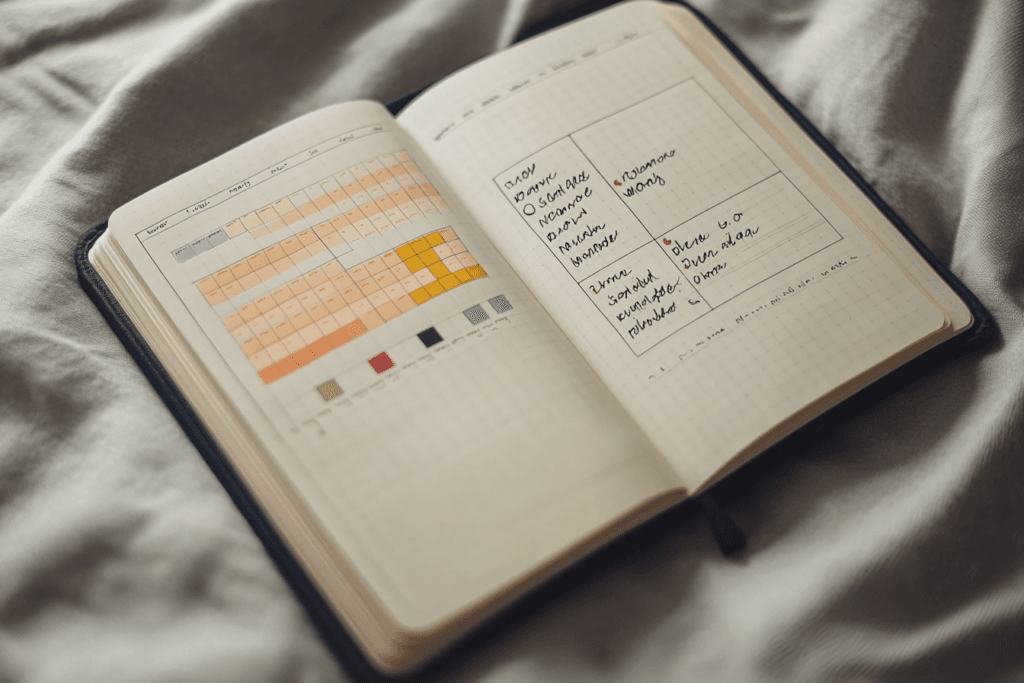
Habit Tracker
The habit tracker provides a simple grid system for monitoring daily behaviors, creating accountability and visual motivation.
For an effective beginner habit tracker:
- Create a grid with dates across the top and habits listed vertically
- Select 3-5 habits to track initially (avoiding overwhelming complexity)
- Mark completed habits with a simple symbol or color
- Review patterns weekly to identify triggers and supports
This collection transforms abstract goals into concrete daily actions, making progress visible and reinforcing positive behaviors through consistent documentation. The visual pattern created by consistent habit completion provides motivation that verbal reminders alone cannot achieve.
Gratitude Log
A gratitude log creates space for daily reflection on positive experiences, building resilience and shifting attention toward constructive elements.
To implement this wellbeing practice:
- Title a page "Gratitude Log" with the month
- Create a simple numbered list (1-30/31) or a calendar grid format
- Write one thing you're grateful for each day
- Keep entries brief (1-2 lines maximum)
This simple collection requires minimal setup while providing substantial emotional benefits, making it ideal for beginners seeking both organization and wellbeing support.

Brain Dump Page
The brain dump page provides an unstructured space for capturing random thoughts, ideas, and concerns without organizational pressure.
To create this mental release valve:
- Title a blank page "Brain Dump" or "Random Thoughts"
- Write down anything that comes to mind without concern for organization
- Later, review the page and highlight actionable items
- Transfer important items to appropriate sections of your bullet journal
This flexible collection serves as a release valve for mental pressure, capturing valuable ideas while clearing mental space for focused attention. The unstructured nature of this page makes it particularly accessible for beginners who may feel intimidated by more elaborate layouts.
Goal Tracker
The goal tracker transforms aspirations into actionable steps with clear progress indicators, providing both structure and motivation.
For an effective goal tracking system:
- Select one meaningful goal to focus on
- Break the goal into 4-8 specific, measurable milestones
- Create a visual way to mark progress (checkboxes, progress bar, etc.)
- Include completion dates for accountability
This collection connects daily activities to meaningful outcomes, helping beginners maintain momentum while working toward important objectives.
Bullet Journal Ideas for Students
These specialized bullet journal ideas for beginners in academic settings address the unique challenges of educational environments, providing structure for both learning and planning.
These student-focused collections adapt the bullet journal methodology to academic needs, creating integrated systems for managing both immediate assignments and long-term projects.
Class Schedule
The class schedule collection provides a centralized reference for weekly academic commitments, creating structure and reducing cognitive load.
To create an effective schedule layout:
- Draw a grid with days of the week across the top and time blocks vertically
- Color-code classes for visual distinction
- Include locations and instructor names for quick reference
- Note important class policies or office hours
This simple but essential layout serves as a foundation for academic planning, ensuring that time allocation aligns with course requirements. The visual nature of the spread helps students identify study blocks and balance workload distribution throughout the week.
Assignment Tracker
The assignment tracker creates a centralized system for monitoring due dates, requirements, and completion status across multiple courses.
For a functional assignment tracking system:
- Create columns for due date, class, assignment description, and status
- Sort entries chronologically to prioritize upcoming work
- Include a symbol system for different assignment types (readings, papers, etc.)
- Add checkboxes for progress stages (started, drafted, completed)
This collection transforms scattered assignment information into an organized system, helping students maintain awareness of academic responsibilities while planning effective work sessions.

Study Planner
The study planner helps students allocate appropriate preparation time for exams and projects, creating balanced study schedules.
To implement this academic tool:
- List upcoming exams or major assignments with dates
- Work backward to identify study sessions needed (typically 4-6 per exam)
- Schedule specific study blocks with focused content areas
- Include checkboxes to track completion
This collection transforms reactive studying into proactive preparation, helping students distribute effort effectively while reducing last-minute pressure.
Bullet Journal Ideas for Mental Wellbeing
These wellness-focused bullet journal ideas for beginners provide frameworks for emotional awareness and self-care, addressing the connection between organization and mental health.
These collections extend the bullet journal beyond task management, creating space for emotional processing and personal growth within the organizational framework.
Mood Tracker
The mood tracker provides a simple visual system for documenting daily emotional states, creating awareness of patterns and triggers.
For an accessible mood tracking system:
- Create a month grid or calendar layout
- Establish a simple color coding system for different emotions
- Fill in each day with the corresponding color
- Note significant events that may influence mood patterns
This collection transforms subjective emotional experiences into observable patterns, helping beginners develop awareness of factors influencing their mental wellbeing. The visual nature of the tracker often reveals connections between life circumstances and emotional states that might otherwise go unnoticed.
Self-Care Menu
The self-care menu creates a personalized reference of effective coping strategies, providing ready options during challenging periods.
To create this wellness resource:
- Divide a page into categories (physical, emotional, social, etc.)
- List specific self-care activities under each category
- Include options requiring different time commitments (5 minutes to 1 hour)
- Mark favorites or particularly effective strategies
This collection transforms reactive coping into proactive self-care, helping beginners maintain wellbeing through intentional practices tailored to their specific needs.
Worry Log
The worry log provides structured space for documenting concerns alongside potential solutions or perspective shifts.
For an effective worry management tool:
- Create columns for the date, worry description, and action/perspective
- Document specific worries as they arise
- Later, revisit and add potential actions or perspective shifts
- Periodically review to identify recurring themes
This collection transforms unproductive worry into constructive problem-solving, helping beginners process concerns while reducing their emotional impact.
Bullet Journal Ideas for Personal Development
These development-focused collections create frameworks for intentional improvement, connecting daily actions to meaningful life directions.
These collections extend the bullet journal beyond immediate productivity, creating systems for intentional living and continued personal evolution.
Reading Log
The reading log creates space for tracking books, noting key insights, and planning future reading selections.
For an effective reading tracker:
- Create sections for books completed, currently reading, and to-read list
- Include fields for title, author, date started/finished
- Add a simple rating system or key takeaways section
- Consider tracking pages read daily for motivation
This collection transforms passive reading into active learning, helping beginners capture valuable insights while building a personalized knowledge system.

Learning Tracker
The learning tracker provides structure for monitoring progress in courses, skills, or languages, making advancement visible.
To implement this development tool:
- Identify a specific skill or subject area
- Break it down into measurable components or milestones
- Create a visual progress system (checklist, progress bar, etc.)
- Schedule regular practice sessions
This collection transforms abstract learning goals into concrete progress markers, helping beginners maintain momentum while developing new capabilities.
Weekly Review
The weekly review creates structured reflection time for evaluating what worked, what didn't, and what needs adjustment.
For an effective review process:
- Schedule a consistent weekly time (typically 20-30 minutes)
- Include prompts for accomplishments, challenges, and insights
- Review upcoming commitments and adjust plans accordingly
- Identify one improvement for the coming week
This collection transforms experience into insight, helping beginners refine their bullet journal approach while building awareness of personal patterns and needs.
- A minimalist template: dates and major events only.
- Pre-draw several months during a quiet period and fill them in later.
- Printables: paste a printed template into the journal.
- A rapid-logging month: fall back to the original bullet journal system of plain lists with signifiers. A very simple month is better than a skipped one.
When there is no time to set up the month:
- A text error: one single line through it, then carry on.
- A date or calendar error: correction tape or a white gel pen, then rewrite once it is dry.
- A layout problem: cover it with washi tape or a sticker, or turn it into a decorative element.
- Information that changed: a small delta symbol (Δ) next to the updated entry.
Fixing a mistake:
When a Spread Goes Wrong or You Run Out of Time
Why Bullet Journal Ideas for Beginners Matter
Bullet journal ideas for beginners matter because an elaborate spread is hard to sustain through a normal week, while a simple structure survives real schedules. The layouts here are starting points chosen for that reason: sustainable first, decorative later.
Conclusion
These beginner-friendly bullet journal ideas provide starting points for developing an organizational system that addresses individual needs without overwhelming complexity.
Research on habit formation indicates that simple, consistent practices lead to long-term adoption more effectively than elaborate but unsustainable systems. The most effective bullet journal (see the monthly spread layouts and seasonal themes section below) approach begins with essential elements and gradually expands based on personal experience and specific requirements. This adaptability represents the system's greatest strength, allowing each person to develop an organizational method that genuinely supports their unique circumstances.
For beginners, the journey starts with permission to keep layouts simple and focus on functionality rather than aesthetics. As psychology professor Dr. Ellen Langer notes in her research on mindfulness, "When we're engaged with what we're doing rather than how it looks, we discover what actually works for us." These bullet journal ideas for beginners offer a practical framework , a starting point that evolves into a personalized tool for organization, reflection, and growth.
By beginning with these foundational bullet journal ideas for beginners, new bullet journalists can establish productive routines while gradually developing their personalized approach to organization and reflection. The system's effectiveness emerges not from perfection but from consistent use that adapts to individual needs and circumstances.
Related reading
- How to Start Journaling
- Bullet Journal Doodles and Headers: Simple Drawing That Supports Your Practice
- How to Create a Habit Tracker Bullet Journal: 7 Simple Steps for Daily Success
Sources
- Diary of a Journal Planner , Accessible seasonal cover and spread techniques for various skill levels
- Cute Little Paper , Minimalist and hybrid junk-journaling approaches for beginners
- My Creative Life Blog , A theme used as a recurring reflection prompt